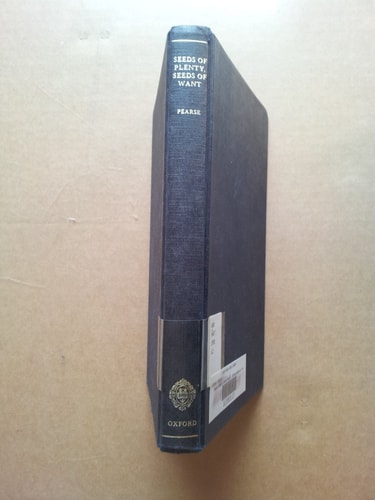
Seeds of Plenty, Seeds of Want: Social and Economic Implications of the Green Revolution
0
0
As an Amazon Associate and affiliate partner, Menrva Books earns from qualifying purchases. Learn more
Author Description
By Andrew Pearse. At Head Of Title: United Nations Research Institute For Social Development. Includes Index. Bibliography: P. [249]-256.
Menrva's Summary
THE THESIS
This work investigates the socio-economic consequences of the Green Revolution, specifically questioning whether the introduction of high-yield crop varieties exacerbated inequality in developing nations. Andrew Pearse, writing under the auspices of the United Nations Research Institute for Social Development, analyzes the systemic impact of agricultural modernization on rural populations. He argues that while technological advancements increased food production, they simultaneously disrupted traditional social structures and concentrated wealth among land-owning elites. The text utilizes a rigorous sociological framework to evaluate the distribution of benefits and burdens within agrarian societies.
THE SCOPE MAP
What You Will Find
- Analysis of the transition from traditional farming to high-yield agricultural technology.
- Examination of the social stratification resulting from the adoption of new crop varieties.
- Case studies focusing on the impact of agricultural policy on small-scale farmers and laborers.
- Evaluation of the role of international development institutions in shaping rural economies.
THE AUTHORITY PERSPECTIVE
Experts recognize this text as a foundational critique of the Green Revolution, frequently cited for its early identification of the social costs associated with agricultural modernization. Readers often note the academic density of the prose, which provides a comprehensive, data-driven assessment of the period's economic shifts.
Page Count:
274
Publication Date:
1980-09-04
Publisher:
Oxford University Press
ISBN-10:
0198771509
ISBN-13:
9780198771500
Economics
History
Social Science
Agriculture
Community Tags
Similar Books