Yankel's Tavern: Jews, Liquor, and Life in the Kingdom of Poland
0
0
As an Amazon Associate and affiliate partner, Menrva Books earns from qualifying purchases. Learn more
Author Description
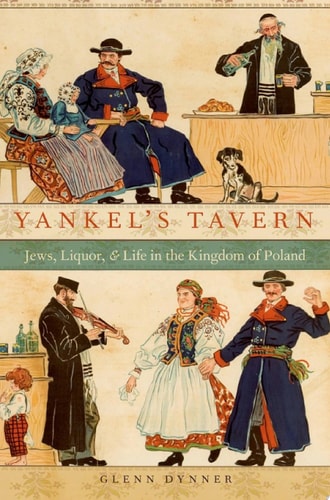
Awarded Honorable Mention for the Jordan Schnitzer Book AwardIn nineteenth-century Eastern Europe, the Jewish-run tavern was often the center of leisure, hospitality, business, and even religious festivities. This unusual situation came about because the nobles who owned taverns throughout the formerly Polish lands believed that only Jews were sober enough to run taverns profitably, a belief so ingrained as to endure even the rise of Hasidism's robust drinking culture. As liquor became the region's boom industry, Jewish tavernkeepers became integral to both local economies and local social life, presiding over Christian celebrations and dispensing advice, medical remedies and loans. Nevertheless, reformers and government officials, blaming Jewish tavernkeepers for epidemic peasant drunkenness, sought to drive Jews out of the liquor trade. Their efforts were particularly intense and sustained in the Kingdom of Poland, a semi-autonomous province of the Russian empire that was often treated as a laboratory for social and political change. Historians have assumed that this spelled the end of the Polish Jewish liquor trade. However, newly discovered archival sources demonstrate that many nobles helped their Jewish tavernkeepers evade fees, bans and expulsions by installing Christians as fronts for their taverns. The result-a vast underground Jewish liquor trade-reflects an impressive level of local Polish-Jewish co-existence that contrasts with the more familiar story of anti-Semitism and violence. By tapping into sources that reveal the lives of everyday Jews and Christians in the Kingdom of Poland, Yankel's Tavern transforms our understanding of the region during the tumultuous period of Polish uprisings and Jewish mystical revival.
Menrva's Summary
THE THESIS
This book investigates the persistence of the Jewish-run liquor trade in the Kingdom of Poland despite intense government efforts to eradicate it during the nineteenth century. Glenn Dynner, a professor of Jewish history, utilizes newly discovered archival documents to challenge the historical consensus that state-led reforms successfully dismantled Jewish economic involvement in the tavern industry. By examining the symbiotic relationship between Polish nobles and Jewish tavernkeepers, the author argues that local cooperation frequently undermined imperial mandates, fostering an unexpected degree of social and economic integration.
THE SCOPE MAP
What You Will Find
- Analysis of the socio-economic role of taverns in nineteenth-century Eastern Europe.
- Examination of the relationship between Hasidic drinking culture and the tavern trade.
- Documentation of the underground networks used to evade anti-Jewish liquor laws.
- Evidence of cooperation between Polish nobility and Jewish entrepreneurs.
Scope Limits
- The study focuses primarily on the Kingdom of Poland rather than the entirety of the Russian Empire.
- The narrative centers on the liquor trade and does not provide a comprehensive history of all Jewish economic activities in the region.
THE AUTHORITY PERSPECTIVE
Historians and scholars of Eastern European studies recognize this work as a significant contribution to understanding the nuances of Polish-Jewish relations beyond the standard narratives of conflict. Readers frequently note the academic density of the prose and the depth of the archival research presented throughout the text.
Page Count:
272
Publication Date:
2014-01-01
Publisher:
Oxford University Press
ISBN-10:
0190206969
ISBN-13:
9780190206963
Religion
History
Judaism
Jewish law
Jews
Jewish Studies
Poland
European History
Economic History
Social History
Politics & Government
Jews poland
Ethnic relations
Community Tags
Other Editions(2)

Similar Books