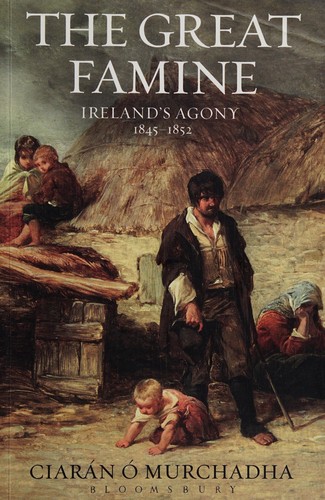
The Great Famine
0
0
As an Amazon Associate and affiliate partner, Menrva Books earns from qualifying purchases. Learn more
Author Description
This is an engaging and moving account of this most destructive event in Irish history. Over one million people died in the Great Famine, and more than one million more emigrated on the coffin ships to America and beyond. Drawing on contemporary eyewitness accounts and diaries, the book charts the arrival of the potato blight in 1845 and the total destruction of the harvests in 1846 which brought a sense of numbing shock to the populace. Far from meeting the relief needs of the poor, the Liberal public works programme was a first example of how relief policies would themselves lead to mortality. Workhouses were swamped with thousands who had subsisted on public works and soup kitchens earlier, and who now gathered in ragged crowds. Unable to cope, workhouse staff were forced to witness hundreds die where they lay, outside the walls. The next phase of degradation was the clearances, or exterminations in popular parlance which took place on a colossal scale. From late 1847 an exodus had begun. The Famine slowly came to an end from late 1849 but the longer term consequences were to reverberate through future decades.--Publisher's description.
Menrva's Summary
THE THESIS
The Great Famine, a catastrophic event in Irish history, resulted in the death of over a million people and the emigration of millions more. The book details the arrival of the potato blight in 1845 and the subsequent destruction of harvests, leading to widespread shock and suffering. It critically examines the inadequate relief policies, such as the public works program and overcrowded workhouses, which exacerbated mortality. The narrative further explores the mass evictions and the profound, long-lasting consequences of the famine that extended for decades.
THE SCOPE MAP
- Detailed account of the arrival and impact of the potato blight in Ireland.
- Eyewitness accounts and contemporary diaries used as primary sources.
- Analysis of the Liberal public works program and its role in relief efforts.
- Description of the conditions and mortality within workhouses.
- Examination of the large-scale evictions and 'clearances' that followed.
- Discussion of the long-term repercussions of the famine on Irish society.
THE AUTHORITY PERSPECTIVE
This book is regarded as an engaging and moving account of the Great Famine, drawing on contemporary eyewitness accounts and diaries to chart the devastating progression of the event. It critically assesses the relief policies of the time, highlighting how they often contributed to mortality rather than alleviating suffering. The narrative progresses through the stages of shock, the breakdown of relief systems, and the widespread evictions, concluding with the long-term reverberations of this destructive period in Irish history.
Page Count:
252
Publication Date:
2011-01-01
ISBN-10:
1847252176
ISBN-13:
9781847252173
History
Non-Fiction
Social History
Irish History
Famine Studies
Community Tags
Similar Books