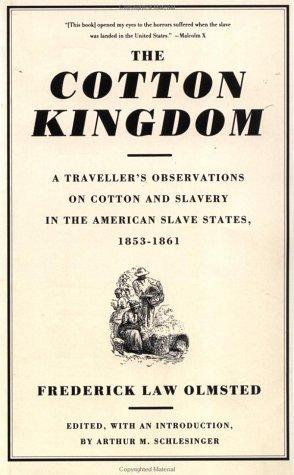
The Cotton Kingdom
0
0
As an Amazon Associate and affiliate partner, Menrva Books earns from qualifying purchases. Learn more
Author Description
Frederick Law Olmsted (1822-1903) is best known for designing New York City's Central Park, and parks in Brooklyn, Chicago, Boston, and Washington. But before he embarked upon his career as the nation's foremost landscape architect, he was a correspondent for The New York Times, and it was under its auspices that he journeyed through the slave states in the 1850s. His day-by-day observations - including intimate accounts of the daily lives of masters and slaves, the operation of the plantation system, and the pernicious effects of slaves on all classes of society, black and white - were largely collected in the Cotton Kingdom. Published in 1861, just as the Southern states were storming out of the Union, it has been hailed ever since as singularly fair and authentic, an unparalleled account of America's "peculiar institution."
Menrva's Summary
THE THESIS
The Cotton Kingdom investigates the realities of the American slave system through the eyes of a keen observer. Frederick Law Olmsted, Sr., renowned for his landscape architecture, undertook extensive travels through the slave states in the 1850s as a correspondent for The New York Times. His detailed observations, compiled in this work, offer an intimate look at the daily lives of both enslavers and the enslaved, the mechanics of the plantation system, and the pervasive societal impact of slavery on all involved. Published on the cusp of the Civil War, the book has been recognized for its fairness and authenticity in documenting America's
THE SCOPE MAP
- Detailed accounts of daily life on plantations in the American South during the 1850s.
- Analysis of the operational dynamics of the slave plantation system.
- Exploration of the social and psychological effects of slavery on all societal classes, both black and white.
- Olmsted's personal observations and journalistic reporting from his travels.
- Historical context of the Southern states leading up to the Civil War.
- An assessment of the 'peculiar institution' from a contemporary perspective.
THE AUTHORITY PERSPECTIVE
Published in 1861, The Cotton Kingdom has been consistently lauded for its singular fairness and authenticity in depicting the institution of slavery in the American South. Its value as an unparalleled contemporary account of the era's social and economic structures is widely acknowledged by historians. The work provides critical insights into the daily lives and systemic operations that defined the antebellum South. This book remains a foundational text for understanding the complexities of slavery in America.
Page Count:
626
Publication Date:
1996-01-01
ISBN-10:
0306807238
Non-Fiction
Biography
Travel
History
Travelogue
Slavery
American South
Social History
Community Tags
Similar Books