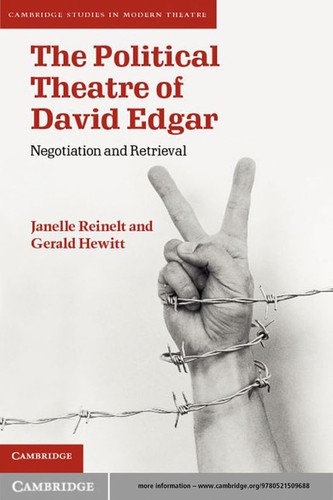
The Political Theatre of David Edgar
0
0
As an Amazon Associate and affiliate partner, Menrva Books earns from qualifying purchases. Learn more
Author Description
David Edgar's writings address the most basic questions of how humans organize and govern themselves in modern societies. This study brings together the disciplines of political philosophy and theatre studies to approach the leading British playwright as a political writer and a public social critic. Edgar uses theatre as a powerful tool of public discourse, an aesthetic modality for engaging with and thinking/feeling through the most pressing social issues of the day. In this he is a supreme rationalist: he deploys character, plot and language to explore ideas, to make certain kinds of discursive cases and model hypothetical alternatives. Reinelt and Hewitt analyze twelve of Edgar's most important plays, including Maydays and Pentecost and also provide detailed discussions of key performances and critical reception to illustrate the playwright's artistic achievement in relation to his contributions as a public figure in British cultural life. Political Commitment and Performative Practice 'Anybody who used to call themselves a Marxist now has fairly intense self-definitional problems'.- David Edgar (1994) 'He is an optimist who has been around'. - John Peters (1994BIB-174) Of the distinctive voices in the contemporary British theatre, David Edgar's provides the most comprehensive articulation of major political questions. His career spans more than four eventful and politically complex decades, and encompasses every variety of writing for performance including agitprop and touring pieces; community plays; radio, film and television plays; and large-scale plays produced in the major national venues such as the Royal Shakespeare Company and the National Theatre. In addition, Edgar has maintained a high profile as a public intellectual, engaging in depth with a wide variety of political issues through newspaper opinion pages, journal essays, and book reviews, as well as via frequent public speaking engagements before a variety of organizations including the Commi
Menrva's Summary
THE THESIS
This study examines David Edgar's significant contributions to British theatre and public discourse, positioning him as a key political writer and social critic. The book integrates political philosophy and theatre studies to analyze Edgar's work, which addresses fundamental questions of societal organization and governance. Edgar utilizes theatre as a potent medium for public discourse, exploring pressing social issues through character, plot, and language to model hypothetical alternatives. The analysis covers twelve of his major plays, alongside discussions of notable performances and critical reception, illustrating his artistic achievements and public intellectual role.
THE SCOPE MAP
- Analysis of David Edgar's engagement with political philosophy and theatre studies.
- Exploration of Edgar's use of theatre as a tool for public discourse and social commentary.
- Detailed examination of twelve of Edgar's most important plays, including 'Maydays' and 'Pentecost'.
- Discussion of key performances and critical reception of Edgar's theatrical works.
- Assessment of Edgar's contributions as a public intellectual and cultural figure in Britain.
- Consideration of Edgar's Marxist background and evolving self-definition.
- Coverage of Edgar's diverse writing for performance, from agitprop to major national productions.
THE AUTHORITY PERSPECTIVE
This study is positioned as a comprehensive analysis of David Edgar's theatrical and public intellectual contributions. By merging political philosophy with theatre studies, the book aims to illuminate Edgar's role as a significant British playwright and social critic. The authors delve into his extensive body of work, including key plays and performances, to illustrate his artistic achievements and his engagement with pressing social and political issues. The analysis highlights Edgar's consistent use of theatre as a platform for public discourse and his ongoing relevance in British cultural life.
Page Count:
313
Publication Date:
2011-01-01
ISBN-10:
0521509688
ISBN-13:
9780521509688
History
Drama
Literary Fiction
Non-Fiction
Biography
Politics
Drama Analysis
Theatre studies
Political Philosophy
Community Tags
Similar Books