
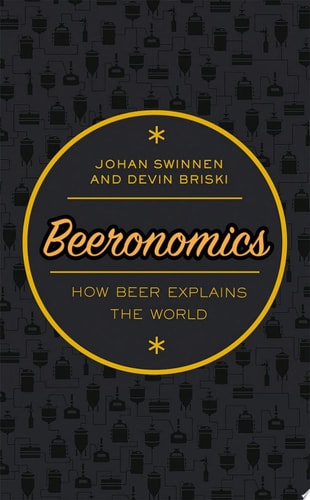
Beeronomics: How Beer Explains the World
0
0
As an Amazon Associate and affiliate partner, Menrva Books earns from qualifying purchases. Learn more
Author Description
From prompting a transition from hunter-gatherer, to an agrarian lifestyle in ancient Mesopotamia, to bankrolling Britain's imperialist conquests, strategic taxation and the regulation of beer has played a pivotal role throughout history. Beeronomics: How Beer Explains the World tells these stories, and many others, whilst also exploring the key innovations that propelled the industrialization and consolidation of the beer market.At the same time when mega-mergers in the brewing industry are creating huge transnationals selling their beer across the globe, the craft beer movement in America and Europe has brought the rich history of ancient brewing techniques to the forefront in recent years. But less talked about is the economic influence of this beverage on the world and the myriad ways it has shaped the course of history. Beeronomics covers world history through the lens of beer, exploring the common role that beer taxation has played throughout and providing context for recognizable brands and consumer trends and tastes.Beeronomics examines key developments that have moved the brewing industry forward. Its most ubiquitous ingredient, hops, was used by the Hanseatic League to establish the export dominance of Hamburg and Bremen in the sixteenth century. During the late nineteenth century, bottom-fermentation led to the spread of industrial lager beer. Industrial innovations in bottling, refrigeration, and TV advertising paved the way for the consolidation and market dominance of major macrobreweries like Anheuser Busch in America and Artois Brewery in Belgium during the twentieth century. We're now in the era of global integration -- one multinational AB InBev, claims 46% of all beer profits -- but there's a counterrevolution afoot of small, independent craft breweries in America, Belgium and around the world. Beeronomics surveys these trends, giving context to why you see which brands and styles on shelves at your local supermarket or on tap at the nearby pub.
Menrva's Summary
THE THESIS
This book investigates how the production, taxation, and regulation of beer have served as fundamental drivers of global economic and historical development. Authors Devin Briski and Johan Swinnen, drawing on their expertise in agricultural economics and policy, utilize a historical framework to trace the evolution of the brewing industry from ancient Mesopotamia to the modern era of multinational conglomerates. They argue that beer is not merely a commodity but a lens through which to understand shifts in industrialization, trade policy, and consumer behavior.
THE SCOPE MAP
What You Will Find
- Historical analysis of beer's role in the transition from hunter-gatherer societies to agrarian economies.
- Examination of the economic impact of taxation and regulation on global trade routes and imperial expansion.
- Technical overview of industrial innovations including bottom-fermentation, refrigeration, and mass-market advertising.
- Comparative study of the consolidation of macrobreweries versus the rise of the contemporary craft beer movement.
THE AUTHORITY PERSPECTIVE
Experts recognize this work as a comprehensive synthesis of economic history and industry analysis that remains accessible to a general audience. Readers frequently note the clarity with which the authors connect complex macroeconomic trends to the familiar landscape of modern consumer markets.
Page Count:
192
Publication Date:
2017-11-07
Publisher:
Oxford University Press
ISBN-10:
0198808305
ISBN-13:
9780198808305
Business
History
Economics
Social Science
Beer
Food And Drink
Community Tags
Other Editions(2)
Similar Books












Reader Comments
Share Your Thoughts
No comments yet. Be the first to share your thoughts!