Dead Souls
0
0
As an Amazon Associate and affiliate partner, Menrva Books earns from qualifying purchases. Learn more
Author Description
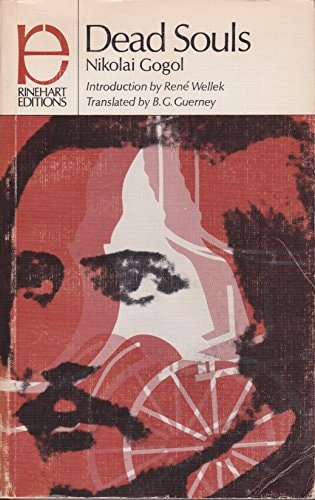
Nikolai Gogol's "Dead Souls" is produced here in a definitive translation by B.G. Guerney. In his introduction, Renè Wellek opines that "whoever comes to the reading of Gogol's 'Dead Souls' with preconceptions of the nature of the Russian novel based upon reading of Dostoevsky and Tolstoy will be surprised and delighted to discover something very different. Here is a comic epic, a gallery of portraits, a loosely assembled travel story with little psychology, no tragic conflict, no debates concerning God and immortality." Instead, Gogol paints a realistic panorama of Russia in the 1840s, complete with a vivid cast of boorish, fraudulent, and banal characters afflicting the culture of the day. Clearly a classic of Russian literature.
Menrva's Summary
THE PULSE
Chichikov, a mysterious middle-aged gentleman, arrives in a provincial Russian town with the bizarre objective of purchasing the legal titles to deceased serfs who remain on the census rolls. He travels across the countryside, visiting various landowners to acquire these 'dead souls' for a scheme involving a mortgage scam. The narrative follows his interactions with a series of eccentric, often grotesque, provincial figures who represent the moral and social decay of the 1840s Russian landscape. The story unfolds as a picaresque travelogue, utilizing a third-person omniscient narrator who frequently interrupts the action to provide social commentary.
INSIDE THE PAGES
- Picaresque narrative structure centered on a journey through provincial Russia
- Satirical character sketches of the landed gentry
- Use of the 'dead souls' metaphor to critique bureaucratic corruption
- Episodic plot progression focused on individual encounters
- Omniscient narrator who engages in direct address with the reader
- Vivid, often grotesque, descriptions of physical environments and social manners
- Absence of traditional tragic conflict or psychological interiority
- Focus on the banality and moral stagnation of the era
THE COLLECTIVE ECHO
Readers and critics frequently highlight the work as a foundational example of Russian satire that diverges significantly from the later, more introspective works of Dostoevsky or Tolstoy. Discussion often centers on the author's ability to transform a mundane bureaucratic premise into a sprawling, comic panorama of human folly. Many observers note that the pacing is intentionally episodic, reflecting the aimless nature of the protagonist's travels through a stagnant society. The effectiveness of the atmosphere relies heavily on the author's sharp, observational prose rather than complex character development or high-stakes action. Readers often find the work to be a distinct study in social critique that remains relevant for its depiction of greed and administrative absurdity.
Page Count:
304
Publication Date:
2000-01-01
Publisher:
International Thomson Publishing
ISBN-10:
0030099005
ISBN-13:
9780030099007
Fiction
Satire
Classic Literature
Classics
Russian
Picaresque