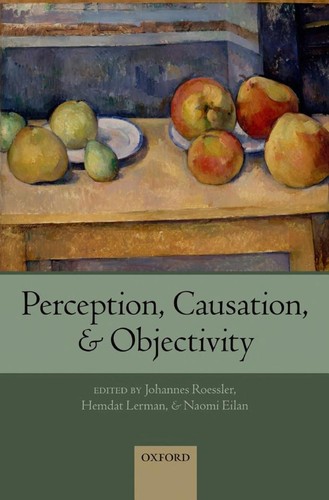
Perception, Causation, and Objectivity
0
0
As an Amazon Associate and affiliate partner, Menrva Books earns from qualifying purchases. Learn more
Author Description
To be a 'commonsense realist' is to hold that perceptual experience is (in general) an immediate awareness of mind-independent objects, and a source of direct knowledge of what such objects are like. Over the past few centuries this view has faced formidable challenges from epistemology, metaphysics, and, more recently, cognitive science. However, in recent years there has been renewed interest in it, due to new work on perceptual consciousness, objectivity, and causal understanding. This volume collects nineteen original essays by leading philosophers and psychologists on these topics. Questions addressed include: What are the commitments of commonsense realism? Does it entail any particular view of the nature of perceptual experience, or any particular view of the epistemology of perceptual knowledge? Should we think of commonsense realism as a view held by some philosophers, or is there a sense in which we are pre-theoretically committed to commonsense realism in virtue of the experience we enjoy or the concepts we use or the explanations we give? Is commonsense realism defensible, and if so how, in the face of the formidable criticism it faces? Specific issues addressed in the philosophical essays include the status of causal requirements on perception, the causal role of perceptual experience, and the relation between objective perception and causal thinking. The scientific essays present a range of perspectives on the development, phylogenetic and ontogenetic, of the human adult conception of perception. Features: 19 brand-new essays, specially written by a leading team of experts; interrogates fundamental assumptions about how we experience the world; interdisciplinary and far-reaching; draws together philosophical and psychological approaches to perception.--Publisher's website.
Menrva's Summary
THE THESIS
This volume interrogates the fundamental assumptions of commonsense realism, a view that perceptual experience offers direct knowledge of mind-independent objects. The book collects nineteen original essays by leading philosophers and psychologists, exploring challenges to commonsense realism from epistemology, metaphysics, and cognitive science, alongside renewed interest in the topic. It addresses whether commonsense realism is a philosophical stance or a pre-theoretical commitment, and how it can be defended against criticism. Specific philosophical essays focus on causal requirements on perception and objective perception, while scientific essays examine the development of human perception.
THE SCOPE MAP
- What are the commitments of commonsense realism?
- Does commonsense realism entail a particular view of perceptual experience or its epistemology?
- Is commonsense realism a held philosophical view or a pre-theoretical commitment?
- How can commonsense realism be defended against criticism?
- The status of causal requirements on perception
- The causal role of perceptual experience
- The relation between objective perception and causal thinking
- Developmental and phylogenetic perspectives on the human adult conception of perception
THE AUTHORITY PERSPECTIVE
This collection brings together leading philosophers and psychologists to re-examine commonsense realism, a foundational view of perception. The essays explore both philosophical arguments and scientific findings related to how we experience the world and our commitment to mind-independent objects. The interdisciplinary approach aims to bridge the gap between theoretical philosophy and empirical psychology. The volume is structured to interrogate fundamental assumptions about perception and knowledge, drawing on recent work in consciousness and causal understanding.
Page Count:
372
Publication Date:
2011-01-01
ISBN-10:
0199692041
ISBN-13:
9780199692040
Non-Fiction
Psychology
Philosophy
Community Tags
Similar Books