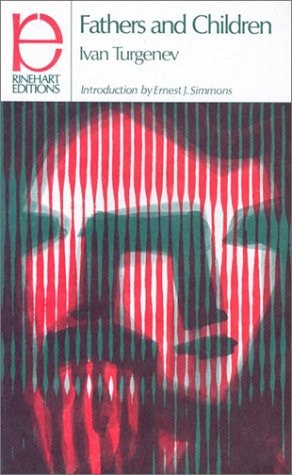
Fathers and Sons
0
0
As an Amazon Associate and affiliate partner, Menrva Books earns from qualifying purchases. Learn more
Author Description
Bazarov—a gifted, impatient, and caustic young man—has journeyed from school to the home of his friend Arkady Kirsanov. But soon Bazarov’s outspoken rejection of authority and social conventions touches off quarrels, misunderstandings, and romantic entanglements that will utterly transform the Kirsanov household and reflect the changes taking place across all of nineteenth-century Russia.Fathers and Sons enraged the old and the young, reactionaries, romantics, and radicals alike when it was first published. At the same time, Turgenev won the acclaim of Flaubert, Maupassant, and Henry James for his craftsmanship as a writer and his psychological insight. Fathers and Sons is now considered one of the greatest novels of the nineteenth century.A timeless depiction of generational conflict during social upheaval, it vividly portrays the clash between the older Russian aristocracy and the youthful radicalism that foreshadowed the revolution to come—and offers modern-day readers much to reflect upon as they look around at their own tumultuous, ever changing world.
Menrva's Summary
THE PULSE
The arrival of the nihilist Bazarov at the Kirsanov estate ignites a volatile confrontation between traditional aristocratic values and the emerging radical ideologies of nineteenth-century Russia. Bazarov, a medical student defined by his rejection of established authority and romantic idealism, challenges the worldview of his friend Arkady’s father and uncle. His presence acts as a catalyst for ideological friction, forcing the characters to defend their beliefs against his cold, scientific materialism. The narrative follows these intellectual and personal clashes, documenting how Bazarov’s uncompromising stance disrupts the domestic stability of the Kirsanov household.
INSIDE THE PAGES
- Exploration of the generational divide between the 1840s liberals and 1860s nihilists
- Character-driven dialogue focusing on philosophical debate
- Third-person omniscient narrative perspective
- Detailed portrayal of the Russian rural aristocracy
- Examination of the conflict between scientific rationalism and romantic sentiment
- Use of irony to highlight the contradictions in the protagonist's beliefs
- Focus on the social and political climate of pre-revolutionary Russia
- Psychological depth in the depiction of romantic entanglement and personal disillusionment
THE COLLECTIVE ECHO
Readers and critics frequently highlight the novel's balanced portrayal of opposing ideologies, noting that Turgenev avoids taking a definitive side in the conflict between the older generation and the radical youth. Discussion often centers on the complexity of Bazarov as a protagonist, whose intellectual arrogance is tempered by his eventual vulnerability. The pacing is noted for its deliberate, character-focused progression rather than rapid plot movement. Many observers appreciate the atmospheric rendering of the Russian countryside, which serves as a backdrop for the shifting social landscape. The work remains a primary reference point for those interested in the historical roots of Russian political radicalism.
Page Count:
261
Publication Date:
1997-01-01
Publisher:
Harcourt College Pub
ISBN-10:
0030096502
ISBN-13:
9780030096501
Philosophical
Social Commentary
Realism
Russian
classic
Community Tags
Other Editions(13)
Independently Published
2020
Default edition
Independently Published
2020
Independently Published
2020

Amazon Digital Services LLC - KDP Print US
2019

CreateSpace Independent Publishing Platform
2014
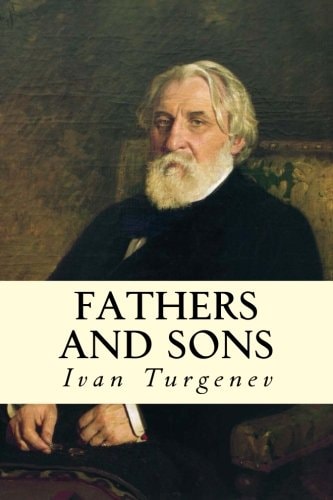
CreateSpace Independent Publishing Platform
2014
CreateSpace Independent Publishing Platform
2014

Multilingua, Incorporated
2002

AMSCO School Publications, Incorporated
2000

Perfection Learning Corporation
1998
Harcourt College Pub
1997
Wordsworth Classics
1996

Classic Textbooks
1867
Similar Books

Reader Comments
Share Your Thoughts
No comments yet. Be the first to share your thoughts!