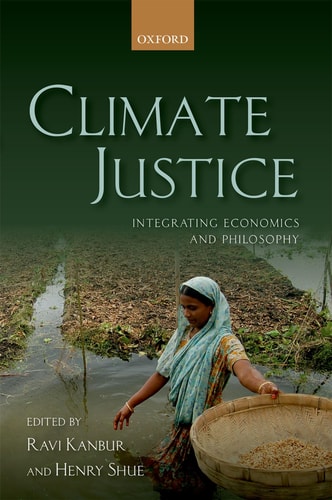
Climate Justice: Integrating Economics and Philosophy
0
0
As an Amazon Associate and affiliate partner, Menrva Books earns from qualifying purchases. Learn more
Author Description
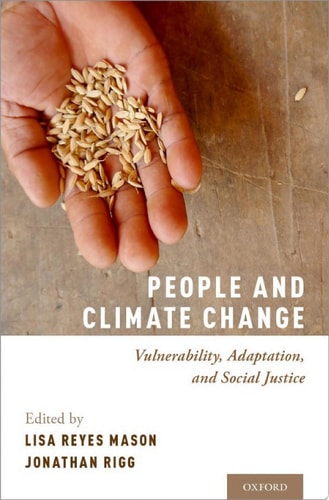
Climate Justice Requires Sharing The Burdens And Benefits Of Climate Change And Its Resolution Equitably And Fairly. It Brings Together Justice Between Generations And Justice Within Generations. In Particular It Requires That Attempts To Address Justice Between Generations Through Various Interventions Designed To Curb Greenhouse Emissions Today Do Not End Up Creating Injustice In Our Time By Hurting The Currently Poor And Vulnerable. The United Nations Sustainable Development Goals (sdgs) Summit In September 2015, And The Conference Of Parties (cop) To The Framework Convention On Climate Change In Paris In December 2015, Brought Climate Change And Its Development Impact Centre Stage In Global Discussions. In The Run Up To Paris, Mary Robinson, Former President Of Ireland And Un Secretary General's Special Envoy For Climate Change, Instituted The Climate Justice Dialogue To Mobilize Political Will And Creative Thinking To Shape An Ambitious And Just International Climate Agreement In 2015. The Editors Of This Volume, An Economist And A Philosopher, Served On The High Level Advisory Committee Of The Climate Justice Dialogue. They Noted The Overlap And Mutual Enforcement Between The Economic And Philosophical Discourses On Climate Justice. But They Also Noted The Great Need For These Strands To Come Together To Support The Public And Policy Discourse. Climate Justice: Integrating Economics And Philosophy Is The Result. Bringing Together Contributions From Economists And Philosophers, Climate Justice Illustrates The Different Approaches, How They Overlap And Interact, And What They Have Already Learned From Each Other And Might Still Have To Learn.
Menrva's Summary
THE THESIS
This volume investigates the intersection of economic theory and philosophical ethics to determine how the burdens and benefits of climate change can be distributed equitably. The editors, an economist and a philosopher, synthesize diverse academic perspectives to address the tension between intergenerational climate goals and the immediate needs of vulnerable populations. By bridging these two disciplines, the text provides a framework for policy discourse that prioritizes both long-term environmental stability and current social equity.
THE SCOPE MAP
What You Will Find
- Analysis of the Climate Justice Dialogue initiated by the United Nations
- Theoretical frameworks for balancing intergenerational justice with current poverty reduction
- Comparative studies of economic and philosophical approaches to climate policy
- Discussion of the United Nations Sustainable Development Goals in relation to climate action
Scope Limits
- The text does not provide technical engineering solutions for carbon sequestration or renewable energy infrastructure
- It does not focus on specific national legislative implementation strategies outside of global policy discourse
THE AUTHORITY PERSPECTIVE
Experts highlight this volume as a foundational interdisciplinary resource for scholars and policymakers seeking to reconcile economic development with ethical climate obligations. Readers frequently note the academic density of the prose, which requires a foundational understanding of both economic theory and moral philosophy to fully grasp the arguments presented.
Page Count:
288
Publication Date:
2018-01-01
Publisher:
Oxford University Press
ISBN-10:
0192542702
ISBN-13:
9780192542700
Economics
Philosophy
Social justice
Climate Change
Sustainability