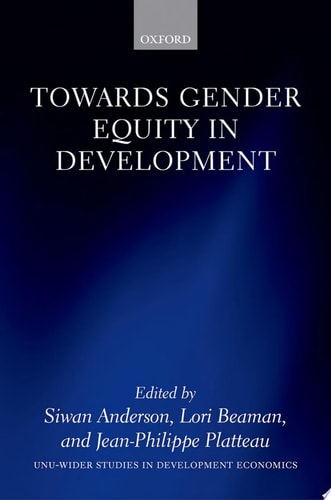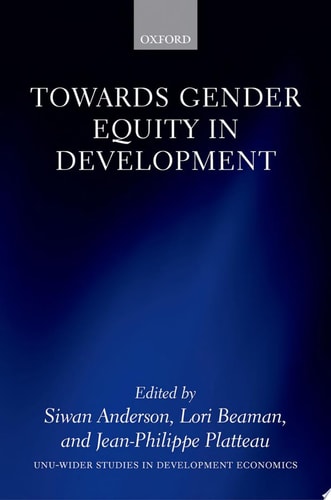
Towards Gender Equity in Development
0
0
As an Amazon Associate and affiliate partner, Menrva Books earns from qualifying purchases. Learn more
Author Description
As a result of widespread mistreatment and overt discrimination, women in the developing world often lack autonomy. Towards Gender Equity in Development brings together leading scholars working on gender issues to explore key sources of female empowerment and discuss the current challenges and opportunities for the future.Exploring three key domains, this book adopts a clear multi-disciplinary approach to present different perspectives from gender-focused economics and social research. It covers marriage and women's relative bargaining position within the household; the options available to women outside of marriage and in the context of their community; and overarching discriminatory laws and cultural norms. It engages with questions of how marriage, divorce, and remarriage practices have evolved and with what effects for women; how female empowerment can benefit from improving options and economic and collective action opportunities; and how the government can act as a lawmaker to contribute to modifying norms and practices that disadvantage women.
Menrva's Summary
THE THESIS
This volume investigates the structural and cultural barriers that prevent gender equity in developing nations and evaluates the mechanisms required to foster female empowerment. The authors, a team of distinguished economists and social researchers, synthesize multi-disciplinary data to examine how household dynamics, community structures, and legislative frameworks interact to either constrain or liberate women. By analyzing the intersection of economic bargaining power and social norms, the text provides a rigorous framework for understanding the persistence of gender-based discrimination in the global south.
THE SCOPE MAP
What You Will Find
- Analysis of marriage, divorce, and remarriage practices as determinants of female autonomy.
- Evaluation of economic and collective action opportunities for women outside the household.
- Examination of the role of government legislation in modifying discriminatory cultural norms.
- Multi-disciplinary research integrating gender-focused economics with sociological field studies.
THE AUTHORITY PERSPECTIVE
Experts identify this collection as a significant contribution to development economics, noting its success in bridging the gap between theoretical economic models and practical social policy. Readers frequently highlight the academic density of the prose, which makes it a valuable resource for researchers and policymakers focused on gender-based development initiatives.
Page Count:
448
Publication Date:
2018-12-18
Publisher:
Oxford University Press
ISBN-10:
0198829590
ISBN-13:
9780198829591
Economics
Developing Countries
Women
Gender Studies
Sex Discrimination Against Women
Marriage & FamilyFamily Science
Sociology
Public Policy