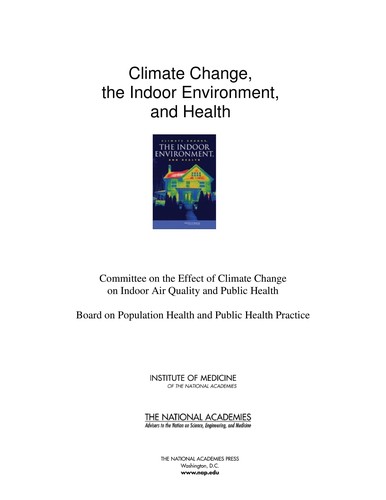
Climate Change, the Indoor Environment, and Health
0
0
As an Amazon Associate and affiliate partner, Menrva Books earns from qualifying purchases. Learn more
Author Description
The indoor environment affects occupants' health and comfort. Poor environmental conditions and indoor contaminants are estimated to cost the U.S. economy tens of billions of dollars a year in exacerbation of illnesses like asthma, allergic symptoms, and subsequent lost productivity. Climate change has the potential to affect the indoor environment because conditions inside buildings are influenced by conditions outside them. Climate change, the indoor environment, and health addresses the impacts that climate change may have on the indoor environment and the resulting health effects. It finds that steps taken to mitigate climate change may cause or exacerbate harmful indoor environmental conditions. The book discusses the role the Environmental Protection Agency (EPA) should take in informing the public, health professionals, and those in the building industry about potential risks and what can be done to address them. The study also recommends that building codes account for climate change projections; that federal agencies join to develop or refine protocols and testing standards for evaluating emissions from materials, furnishings, and appliances used in buildings; and that building weatherization efforts include consideration of health effects. Climate change, the indoor environment, and health is written primarily for the EPA and other federal agencies, organizations, and researchers with interests in public health; the environment; building design, construction, and operation; and climate issues.--Publisher's description.
Menrva's Summary
THE THESIS
Climate change poses a significant threat to human health by altering indoor environments. The indoor environment directly impacts occupant health and comfort, with poor conditions and contaminants costing the U.S. economy billions annually through exacerbated illnesses and lost productivity. This book investigates how climate change, influenced by external conditions, can degrade indoor air quality and lead to adverse health effects. It examines the role of the Environmental Protection Agency (EPA) in disseminating information and recommends updates to building codes and emissions testing protocols to account for climate change projections and their health implications.
THE SCOPE MAP
- Analysis of how climate change impacts indoor environmental conditions.
- Discussion of the resulting health effects, including exacerbation of asthma and allergies.
- Recommendations for the Environmental Protection Agency (EPA) regarding public information and industry guidance.
- Proposals for updating building codes to incorporate climate change projections.
- Suggestions for developing and refining testing standards for emissions from building materials, furnishings, and appliances.
- Consideration of health effects in building weatherization efforts.
THE AUTHORITY PERSPECTIVE
This report is primarily intended for federal agencies like the EPA, as well as organizations and researchers focused on public health, environmental issues, building design, and climate science. The recommendations suggest a proactive approach to mitigating potential health risks associated with climate change's influence on indoor environments. It emphasizes the need for inter-agency collaboration and the integration of climate projections into building standards and practices. The study aims to inform policy and industry standards to safeguard public health against these evolving environmental challenges.
Page Count:
272
Publication Date:
2011-01-01
ISBN-10:
0309209412
ISBN-13:
9780309209410
Non-Fiction
Science
Health
Climate Change
Building Science
Public Health
Community Tags
Similar Books