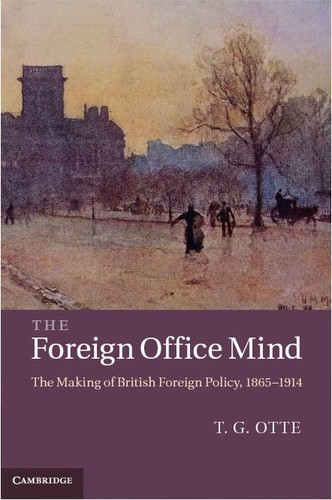
The Foreign Office Mind
0
0
As an Amazon Associate and affiliate partner, Menrva Books earns from qualifying purchases. Learn more
Author Description
With this pioneering approach to the study of international history, T. G. Otte reconstructs the underlying principles, elite perceptions and 'unspoken assumptions' that shaped British foreign policy between the death of Palmerston and the outbreak of the First World War. Grounded in a wide range of public and private archival sources, and drawing on sociological insights, The Foreign Office Mind presents a comprehensive analysis of the foreign service as a 'knowledge-based-organisation', rooted in the social and educational background of the diplomatic elite and the broader political, social and cultural fabric of Victorian and Edwardian Britain. The book charts how the collective mindset of successive generations of professional diplomats evolved, and reacted to and shaped changes in international relations during the second half of the nineteenth century, including the balance of power and arms races, the origins of appeasement and the origins of the First World War. - Publisher.
Menrva's Summary
THE THESIS
This book investigates the unspoken assumptions and underlying principles that guided British foreign policy from the late 19th century to the eve of World War I. Thomas G. Otte, drawing on extensive archival research and sociological insights, analyzes the British foreign service as a knowledge-based organization. He examines how the social and educational backgrounds of the diplomatic elite, within the broader context of Victorian and Edwardian Britain, shaped the collective mindset of diplomats. The book traces the evolution of this mindset and its reaction to and influence on international relations, including the balance of power, arms races, and the origins of appeasement and the First World War.
THE SCOPE MAP
- Analysis of British foreign policy principles between the death of Palmerston and WWI.
- Reconstruction of 'unspoken assumptions' guiding diplomatic decisions.
- Examination of the foreign service as a 'knowledge-based organization'.
- Exploration of the social and educational background of the diplomatic elite.
- Contextualization within the political, social, and cultural fabric of Victorian and Edwardian Britain.
- Charting the evolution of the collective mindset of professional diplomats.
- Analysis of how this mindset shaped and reacted to changes in international relations.
- Discussion of key historical events including the balance of power, arms races, appeasement, and the origins of WWI.
THE AUTHORITY PERSPECTIVE
This scholarly work is recognized for its pioneering approach to the study of international history, grounded in extensive archival research. It offers a comprehensive analysis of the British foreign service and its role in shaping policy during a critical period. The book's strength lies in its detailed examination of the intellectual and social underpinnings of diplomatic decision-making.
Page Count:
437
Publication Date:
2011-01-01
ISBN-10:
1107006503
ISBN-13:
9781107006508
History
Non-Fiction
Edwardian Era
Diplomacy
Victorian Era
International relations
British History
Community Tags
Similar Books