Who We Are and How We Got Here
0
0
As an Amazon Associate and affiliate partner, Menrva Books earns from qualifying purchases. Learn more
Author Description
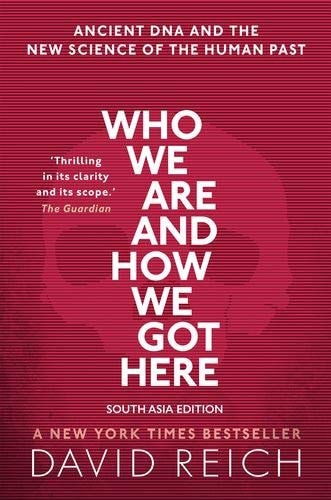
The past few years have witnessed a revolution in our ability to obtain DNA from ancient humans. This important new data has added to our knowledge from archaeology and anthropology, helped resolve long-existing controversies, challenged long-held views, and thrown up remarkable surprises. The emerging picture is one of many waves of ancient human migrations, so that all populations living today are mixes of ancient ones, and often carry a genetic component from archaic humans. David Reich, whose team has been at the forefront of these discoveries, explains what genetics is telling us about ourselves and our complex and often surprising ancestry. Gone are old ideas of any kind of racial purity. Instead, we are finding a rich variety of mixtures. Reich describes the cutting-edge findings from the past few years, and also considers the sensitivities involved in tracing ancestry, with science sometimes jostling with politics and tradition. He brings an important wider message: that we should recognize that every one of us is the result of a long history of migration and intermixing of ancient peoples, which we carry as ghosts in our DNA. What will we discover next?
Menrva's Summary
THE THESIS
How does the study of ancient DNA reshape our understanding of human history and the origins of modern populations? David Reich, a prominent geneticist and professor at Harvard Medical School, utilizes his team's pioneering research in ancient DNA sequencing to challenge traditional anthropological models. He argues that human history is defined by constant migration and genetic admixture, effectively dismantling outdated concepts of racial purity through empirical genomic evidence. The text synthesizes complex biological data with historical and archaeological findings to present a new framework for human ancestry.
THE SCOPE MAP
What You Will Find
- Analysis of ancient DNA sequencing techniques and their application to human remains.
- Evidence of large-scale prehistoric migrations and population intermixing.
- Examination of genetic contributions from archaic human groups to modern populations.
- Discussion on the intersection of genomic science, social identity, and political sensitivity.
THE AUTHORITY PERSPECTIVE
Experts and reviewers recognize this work as a significant synthesis of the rapidly evolving field of paleogenetics. Readers frequently note the technical density of the genomic data, yet appreciate the author's effort to contextualize these findings within broader historical and social frameworks.
Page Count:
368
Publication Date:
2018-05-30
Publisher:
OUP Oxford
ISBN-10:
0198831447
ISBN-13:
9780198831440
History
Science
Archaeology
Anthropology
Genetics
Subjects
Community Tags
Similar Books