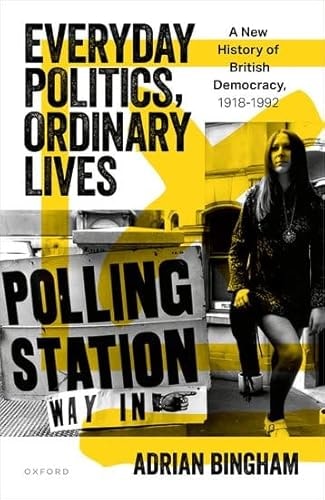
Everyday Politics, Ordinary Lives: A New History of British Democracy, 1918-1992
0
0
As an Amazon Associate and affiliate partner, Menrva Books earns from qualifying purchases. Learn more
Author Description
What Did British Citizens Really Feel About The Political System, Their Role In It, And The People Who Represented Them? This Book Examines British Democracy From Below, Investigating How Electors Understood Politics And How They Viewed Its Relationship To Their Lives, From The Establishment Of A Near Democracy With The Representation Of The People Act 1918 Up Until The Rise Of The Internet And 24-hour News Channels In The Early 1990s. It Focuses On The Everyday Political Opinions, Discussions And Interactions Of Ordinary British Voters In The Period, And Pays Attention To The Ways In Which Women, Young People And Minoritized Groups Related To A Political System Dominated By Middle-aged Men. The Book Argues That Most People, Across The Period, Felt Remote From Politics And Sceptical Of Politicians. But This Reflected The Perception That The World Of Parliamentary Debates And Party Intrigue Was Distant, Insular And Rather Impenetrable, Not That People Did Not Care About Political Issues Or Have A Desire To Improve Their Position. Britain Was Home To Plenty Of Everyday Political Thinking And Conversation, And The Amount And Quality Of This Activity Tended To Increase And Improve Over The Period As People Became Better Educated, Had Access To More Information Through The Media, And The Power Of The Democratic Ideal Grew In Strength Over The Period. The Book Maps These Changing Patterns Of Political Support To Deeper Social And Cultural Developments, And Thereby Produce A New And Distinctive History Of British Democracy That Challenges Some Of The Simplistic Narratives That Underpin Contemporary Political Debate-- Provided By Publisher.
Menrva's Summary
THE THESIS
This book investigates how ordinary British citizens perceived and engaged with their political system between 1918 and 1992, challenging the assumption that public skepticism equated to political apathy. Adrian Bingham, a historian specializing in modern British social and political history, utilizes a wide array of archival materials and media analysis to reconstruct the political consciousness of the electorate. He argues that while voters often felt alienated from the insular world of Westminster, they remained deeply invested in political issues and the improvement of their own social conditions. The work posits that political engagement actually deepened throughout the 20th century as education levels rose and access to information expanded.
THE SCOPE MAP
What You Will Find
- A comprehensive analysis of British political culture from the 1918 Representation of the People Act to the early 1990s.
- Examination of how women, young people, and minoritized groups navigated a male-dominated political landscape.
- Integration of social and cultural history to explain shifts in democratic participation and public opinion.
- Evidence drawn from contemporary media, public discourse, and historical records of everyday political interaction.
THE AUTHORITY PERSPECTIVE
Historians and political scientists recognize this work as a significant contribution to the study of democratic engagement from the perspective of the electorate rather than the elite. Scholars frequently highlight the book's success in synthesizing complex social trends into a coherent narrative that challenges traditional top-down political histories.
Page Count:
336
Publication Date:
2025-03-01
Publisher:
Oxford University Press
ISBN-10:
0198840357
ISBN-13:
9780198840350
History
Democracy
Europe
British History
Educational Resources
Social History
Community Tags
Similar Books