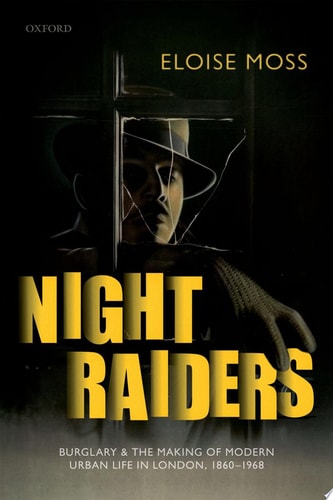
Night Raiders: Burglary and the Making of Modern Urban Life in London, 1860-1968
0
0
As an Amazon Associate and affiliate partner, Menrva Books earns from qualifying purchases. Learn more
Author Description
Night Raiders is the first history of burglary in modern Britain. Until 1968, burglary was defined in law as occurring only between the 'night-time' hours of nine pm and six am in residential buildings. Time and space gave burglary a unique cloak of terror, since burglars' victims were likely to be in the bedroom, asleep and unawares, when the intruder crept in, prowling near them in the darkness. Yet fear sometimes gave way to sexual fantasy; eroticized visions of handsome young thieves sneaking around the boudoirs of beautiful, lonely heiresses emerged alongside tales of violence and loss in popular culture, confounding social commentators by casting the burglar as criminal hero.Night Raiders charts how burglary lay historically at the heart of national debates over the meanings of 'home', experiences of urban life, and social inequality. The book explores intimate stories of the devastation caused by burglars' presence in the most private domains, showing how they are deeply embedded within broader histories of capitalism and liberal democracy. The fear and fascination surrounding burglary were mobilized by media, state, and market to sell insurance and security technologies, whilst also popularising the crime in fiction, theatre, and film. Cat burglars' rooftop adventures transformed ideas about the architecture and policing of the city, and post-war 'spy-burglars' theft of information illuminated Cold War skirmishes across the capital. More than any other crime, burglary shaped the everyday rhythms, purchases, and perceptions of modern urban life.
Menrva's Summary
THE THESIS
How did the specific legal and cultural construction of burglary between 1860 and 1968 fundamentally shape the British understanding of home, privacy, and urban security? Eloise Moss, a historian specializing in modern British social history, utilizes a vast array of primary sources including police records, media archives, and popular fiction to argue that burglary was not merely a crime, but a central force in the development of modern urban life. She demonstrates how the state, the insurance industry, and the media collaborated to transform the fear of the nocturnal intruder into a catalyst for consumerism and architectural change. By examining the intersection of law, capitalism, and social anxiety, the book reveals how the figure of the burglar became a complex symbol of both domestic vulnerability and eroticized danger.
THE SCOPE MAP
What You Will Find
- A comprehensive historical analysis of British burglary laws and their evolution from 1860 to 1968.
- Examination of the symbiotic relationship between the rise of the security industry and public fear of home invasion.
- Case studies illustrating the representation of burglars in popular culture, including film, theater, and literature.
- Analysis of how the 'night-time' legal definition of burglary influenced urban architecture and policing strategies.
THE AUTHORITY PERSPECTIVE
Historians and criminologists recognize this work as a definitive study on the cultural history of crime in Britain. Readers frequently note the meticulous archival research and the author's ability to connect intimate domestic experiences with broader shifts in capitalist and political structures.
Page Count:
272
Publication Date:
2019-09-04
Publisher:
Oxford University Press
ISBN-10:
0198840381
ISBN-13:
9780198840381
History
Sociology
Burglary
Criminology
London England
Urban Studies
Social History
British History
Community Tags
Similar Books