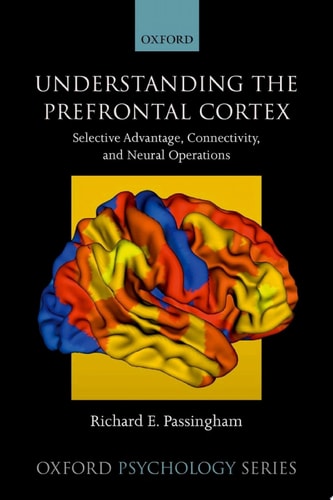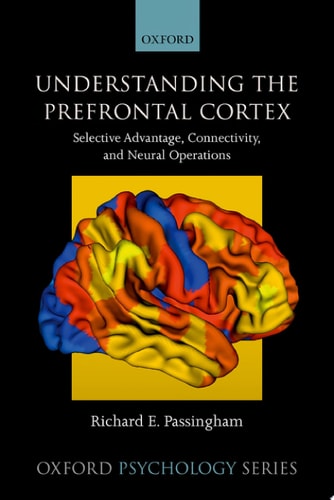
Understanding the Prefrontal Cortex: Selective Advantage, Connectivity, and Neural Operations
0
0
As an Amazon Associate and affiliate partner, Menrva Books earns from qualifying purchases. Learn more
Author Description
A successor to the acclaimed Neurobiology of the Prefrontal Cortex, Understanding the Prefrontal Cortex presents a careful study of the anatomical connections in this brain region, showing how each area and subarea of the brain has a unique pattern of connections, and exploring the transformation that this area performs - from its inputs to it outputs.The book starts with two chapters of foundational material, before considering five subdivisions of the prefrontal cortex, and looking at the transformation that each one performs. Next it considers how the prefrontal cortex interacts with the rest of the brain, including not only cortical areas but also subcortical areas such as the basal ganglia and cerebellum.The book ends with a final section in which these principles are applied to the human brain. It starts by discussing the expansion of the prefrontal cortex during human evolution. It then considers how the human brain has co-opted mechanisms that existed in our primate ancestors, and by providing new inputs had extended them so as to support reasoning, remembering events from the distant past and imagining events in the distant future, the sense of self, language, the ability to understand the mental states of others, and the ability to cooperate and learn social and moral rules.Written by a leading brain scientist, the book will be an important and influential contribution to the neuroscience literature.
Menrva's Summary
THE THESIS
This book investigates how the anatomical connectivity and neural operations of the prefrontal cortex facilitate complex cognitive functions and human evolutionary advantages. Richard Passingham, a prominent neuroscientist, synthesizes anatomical data and functional research to map the specific transformations performed by various prefrontal subareas. He argues that the expansion and integration of these regions with subcortical structures provide the biological basis for higher-order human capabilities such as reasoning, social cognition, and long-term planning.
THE SCOPE MAP
What You Will Find
- Detailed anatomical mapping of prefrontal cortex subdivisions and their unique connectivity patterns.
- Analysis of neural transformations from sensory inputs to behavioral outputs.
- Examination of interactions between the prefrontal cortex, basal ganglia, and cerebellum.
- Evolutionary perspective on how primate brain mechanisms were co-opted to support human language, moral reasoning, and the sense of self.
THE AUTHORITY PERSPECTIVE
Experts recognize this work as a rigorous, foundational text that bridges the gap between neuroanatomy and cognitive psychology. Readers frequently note the academic density of the prose, which serves as a comprehensive reference for researchers and advanced students in the field of neuroscience.
Page Count:
528
Publication Date:
2021-08-03
Publisher:
Oxford University Press
ISBN-10:
0198844573
ISBN-13:
9780198844570
Psychology
Physiology
Neuroscience
Biology
Evolutionary Biology