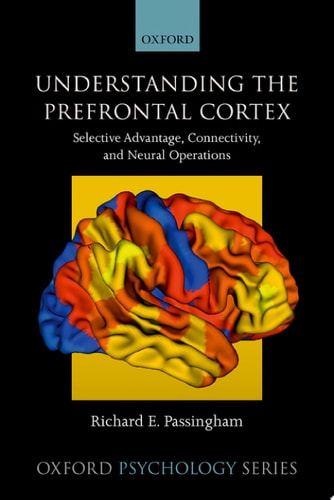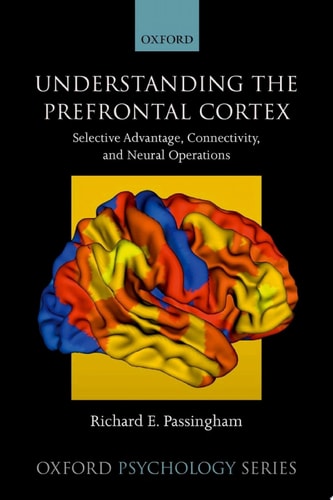
Understanding the Prefrontal Cortex: Selective Advantage, Connectivity, and Neural Operations
0
0
As an Amazon Associate and affiliate partner, Menrva Books earns from qualifying purchases. Learn more
Author Description
A successor to the acclaimed 'Neurobiology of the Prefrontal Cortex', 'Understanding the Prefrontal Cortex' presents a careful study of the anatomical connections in this brain region, showing how each area and subarea of the brain has a unique pattern of connections, and exploring the transformation that this area performs - from its inputs to it outputs. The book starts with two chapters of foundational material, before considering five subdivisions of the prefrontal cortex, and looking at the transformation that each one performs. Next it considers how the prefrontal cortex interacts with the rest of the brain, including not only cortical areas but also subcortical areas such as the basal ganglia and cerebellum. The book ends with a final section in which these principles are applied to the human brain. It starts by discussing the expansion of the prefrontal cortex during human evolution. It then considers how the human brain has co-opted mechanisms that existed in our primate ancestors, and by providing new inputs had extended them so as to support reasoning, remembering events from the distant past and imagining events in the distant future, the sense of self, language, the ability to understand the mental states of others, and the ability to cooperate and learn social and moral rules. Written by a leading brain scientist, the book will be an important and influential contribution to the neuroscience literature.
Menrva's Summary
THE THESIS
This book investigates the functional architecture of the prefrontal cortex by analyzing its anatomical connectivity and the specific neural transformations that define its role in cognition. Richard Passingham, a distinguished neuroscientist, synthesizes decades of research to argue that the prefrontal cortex operates through distinct subregional circuits that process inputs into complex behavioral outputs. By examining both primate models and human evolutionary expansion, the author provides a framework for understanding how specialized neural mechanisms support high-level cognitive functions.
THE SCOPE MAP
What You Will Find
- Detailed anatomical mapping of prefrontal subareas and their unique connectivity patterns.
- Analysis of neural transformations occurring between cortical and subcortical regions, including the basal ganglia and cerebellum.
- Evolutionary perspective on the expansion of the human prefrontal cortex and its role in social cognition, language, and moral reasoning.
Scope Limits
- The text focuses primarily on structural and functional neurobiology rather than clinical pathology or psychiatric treatment protocols.
THE AUTHORITY PERSPECTIVE
Experts recognize this work as a rigorous, foundational text for students and researchers in cognitive neuroscience. Readers frequently note the academic density of the prose, which requires a solid background in neuroanatomy to fully appreciate the author's detailed mapping of neural circuits.
Page Count:
528
Publication Date:
2021-01-01
Publisher:
OUP Oxford
ISBN-10:
019258300X
ISBN-13:
9780192583000
Psychology
Biology
Medical
Neuroscience
Evolutionary Biology
Allied Health