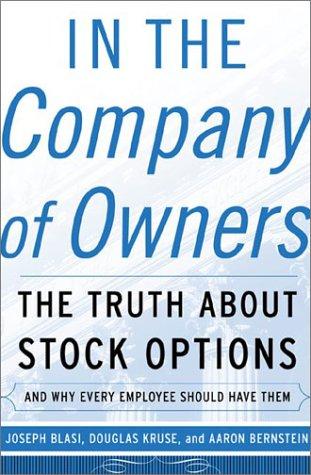
In the Company of Owners
0
0
As an Amazon Associate and affiliate partner, Menrva Books earns from qualifying purchases. Learn more
Author Description
"Joseph Blasi, Douglas Kruse, and Aaron Bernstein show how American companies would perform much better if they followed the lead of many high-tech firms and granted options to their entire workforce, rather than to just a tiny corporate elite. Using SEC data in a way never done before, they document the vast wealth executives have accumulated for themselves and show how the abuse of options has taken place not just at scandal-ridden companies such as Enron and WorldCom but across the entire reach of corporate America. In the company of Owners argues that there's a better way. Broad employee ownership through stock options offers a new model for U.S. corporations and American capitalism. The authors explain how employees and shareholders alike would benefit if most large companies adopted what they call the partnership capitalism approach - using options to encourage employees to think and act like owners."--BOOK JACKET.
Menrva's Summary
THE THESIS
The book investigates how widespread employee stock ownership can improve corporate performance and reshape American capitalism. The authors, Joseph R. Blasi, Douglas Kruse, and Aaron Bernstein, leverage SEC data to demonstrate the vast wealth accumulated by executives through stock options, often at the expense of broader employee benefit. They argue that a shift towards 'partnership capitalism,' where stock options are granted to the entire workforce, would foster a more equitable and productive business environment, benefiting both employees and shareholders.
THE SCOPE MAP
- Analysis of SEC data to document executive wealth accumulation through stock options.
- Examination of stock option abuse across corporate America, including scandal-ridden companies.
- Proposal of 'partnership capitalism' as a model for U.S. corporations.
- Argument for broad employee ownership through stock options.
- Explanation of how employees and shareholders would benefit from widespread option grants.
- Comparison with high-tech firms that grant options to their entire workforce.
THE AUTHORITY PERSPECTIVE
The book presents a compelling argument for a fundamental shift in corporate compensation and ownership structures in the United States. By analyzing extensive SEC data, the authors provide a data-driven critique of executive compensation practices and propose a model of 'partnership capitalism' that benefits all stakeholders. The work suggests that granting stock options broadly to employees, rather than concentrating them among a select few, can lead to improved company performance and a more equitable economic system. This perspective challenges conventional corporate governance and advocates for a more inclusive approach to wealth creation.
Page Count:
256
Publication Date:
2003-01-01
ISBN-10:
0465007007
ISBN-13:
9780465007004
Business
Economics
Non-Fiction
Corporate governance
Community Tags
Similar Books