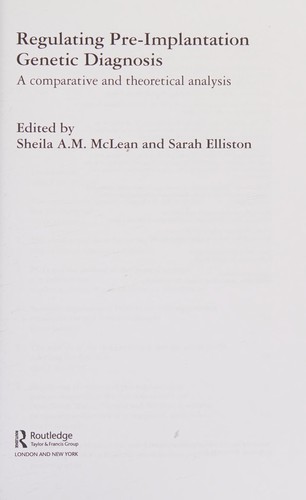
Regulating Pre-implantation Genetic Diagnosis
0
0
As an Amazon Associate and affiliate partner, Menrva Books earns from qualifying purchases. Learn more
Author Description
The successful achievement of pregnancies following pre-implantation genetic diagnosis (PGD) was first reported in April 1990. The technology is often used for patients who are at substantial risk of conceiving a pregnancy affected by a known genetic disorder, however from this technology other more controversial uses have arisen such as HLA typing to save the life of a sibling, gender selection for social reasons, the prevention of late onset diseases, or the prevention of diseases which may be genetically predisposed to developing such as breast cancer. The technology surrounding PGD is constantly developing, giving rise to new and unexpected consequences that create fresh ethical and legal dilemmas. Featuring internationally recognized experts in this field this book critically explores the regulation of PGD and the broader legal and ethical issues. It looks at the regulatory situation in a number of jurisdictions including New Zealand, Asutralia and the UK, but it also explores a number of themes of wide significance including a historical consideration of PGD and its part in the creation of the "genetic embryo" as a political tool, the over-regulation of PGD, the place of the woman in the regulation of PGD and the ethical difficulties in handling this additional unexpected medical information yielded by new technologies.
Menrva's Summary
THE THESIS
This book critically explores the regulation of pre-implantation genetic diagnosis (PGD) and its associated legal and ethical dilemmas. The technology, first reported in 1990, is primarily used for patients at risk of genetic disorders, but has expanded to more controversial applications like HLA typing, social sex selection, and prevention of predisposed diseases. As PGD technology rapidly develops, it presents new ethical and legal challenges that require careful consideration. The book features international experts to examine these complex issues.
THE SCOPE MAP
- Analysis of the regulatory landscape for PGD in various jurisdictions, including New Zealand, Australia, and the UK.
- Exploration of the historical development of PGD and its role in the creation of the "genetic embryo" as a political tool.
- Discussion on the potential for over-regulation of PGD and its implications.
- Examination of the position of women within the regulatory framework of PGD.
- Consideration of the ethical difficulties arising from unexpected medical information yielded by new technologies.
THE AUTHORITY PERSPECTIVE
The book addresses the complex and evolving regulatory, legal, and ethical issues surrounding pre-implantation genetic diagnosis (PGD). It draws on the expertise of internationally recognized figures in the field to provide a critical examination of the technology's applications, from its primary use in preventing genetic disorders to more controversial uses. The work investigates regulatory approaches in different countries and delves into themes such as the political use of the 'genetic embryo' and the ethical handling of incidental medical findings. The subject matter points to a dense, specialist text aimed at legal scholars, ethicists, and medical professionals.
Page Count:
250
Publication Date:
2012-01-01
ISBN-10:
041568644X
ISBN-13:
9780415686440
Science
Politics
Non-Fiction
Health
Bioethics
Reproductive Technology
Medical Law
Genetics
Community Tags
Similar Books