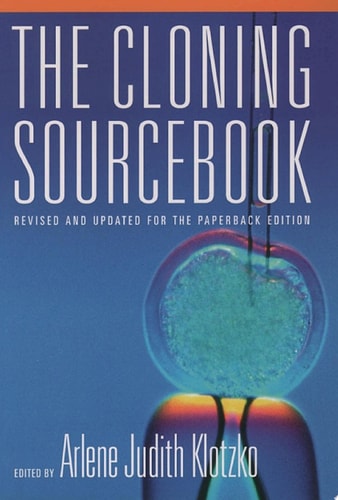
The Cloning Sourcebook
0
0
As an Amazon Associate and affiliate partner, Menrva Books earns from qualifying purchases. Learn more
Author Description
Animal cloning has developed quickly since the birth of Dolly the sheep. Yet many of the first questions to be raised still need to be answered. What do Dolly and her fellow mouse, cow, pig, goat and monkey clones mean for science? And for society? Why do so many people respond so fearfully to cloning? What are the ethical issues raised by cloning animals, and in the future, humans? How are the makers of public policy coping with the stunning fact that an entire animal can be reconstructed from a single adult cell? And that humans might well be next?The Cloning Source Book addresses all of these questions in a way that is unique in the cloning literature, by grounding what is effectively an interdisciplinary conversation in solid science. In the first section of the book, the key scientists responsible for the early and crucial developments in cloning speak to us directly, and other scientists evaluate and comment on these developments.The second section explores the context of cloning and includes sociological, mythological, and historical perspectives on science, ethics, and policy. The authors also examine the media's treatment of the Dolly story and its aftermath, both in the United States and in Britain. The third section, on ethics, contains a broad range of papers written by some of the major commentators in the field. The fourth section addresses legal and policy issues. It features individual and collective contributions by those who have actually shaped public policy on reproductive cloning, therapeutic cloning, and similarly contentious bioethical issues in the United States, Britain, and the European Union.Animal cloning continues for agricultural and medicinal purposes, the latter in combination with transgenics. Human cloning for therapeutic purposes has recently been made legal in Britain. The goal is to produce an early embryo and then derive stem cells that are immunologically matched to the donor. Two human reproductive cloning projects have been a
Menrva's Summary
THE THESIS
This book investigates the scientific, ethical, and policy implications of animal and human cloning in the post-Dolly era. Arlene J. Klotzko compiles an interdisciplinary collection of essays from scientists, ethicists, and policymakers to examine the societal impact of reproductive and therapeutic cloning. The text provides a framework for understanding how biological breakthroughs intersect with public perception, legal regulation, and moral philosophy.
THE SCOPE MAP
What You Will Find
- Primary accounts from scientists involved in early cloning developments
- Sociological and historical analyses of cloning in media and culture
- Comparative policy frameworks from the United States, Britain, and the European Union
- Ethical debates regarding therapeutic versus reproductive cloning
Scope Limits
- Does not provide a technical manual for laboratory cloning procedures
- Does not cover developments occurring after the book's publication date
THE AUTHORITY PERSPECTIVE
Experts recognize this text as a comprehensive resource for understanding the early multidisciplinary discourse surrounding cloning technology. Readers frequently note the academic density of the prose, which balances technical scientific explanation with complex ethical and legal arguments.
Page Count:
340
Publication Date:
2003-01-01
Publisher:
Oxford University Press
ISBN-10:
0190284544
ISBN-13:
9780190284541
Philosophy
Non-Fiction
Science
Sociology
Allied Health
Cloning
Medical
Public Policy
Bioethics
Reproductive Technology
Genetics
Community Tags
Similar Books