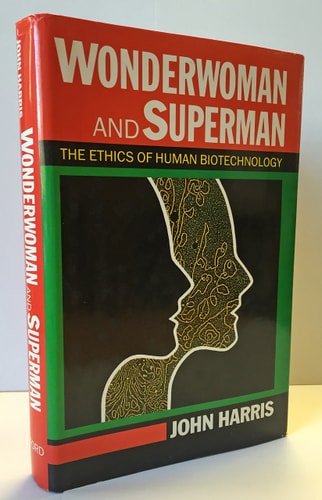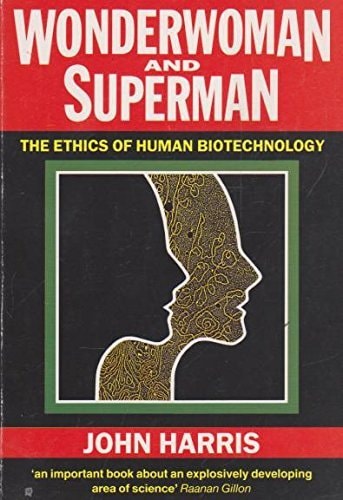
Wonderwoman and Superman
0
0
As an Amazon Associate and affiliate partner, Menrva Books earns from qualifying purchases. Learn more
Author Description
Since the birth of the first test-tube baby, Louise Brown, in 1977, we have seen truly remarkable advances in biotechnology. We can now screen the fetus for Down Syndrome, Spina Bifida, and a wide range of genetic disorders. We can rearrange genes in DNA chains and redirect the evolution of species. We can record an individual's genetic fingerprint. And we can potentially insert genes into human DNA that will produce physical warning signs of cancer, allowing early detection. In fact, biotechnology has progressed to such a point that virtually any kind of genetic manipulation, if not already possible, is just around the corner. But these breakthroughs also raise serious ethical and moral dilemmas that we are only now beginning to confront. In Wonderwoman and Superman, noted medical ethicist John Harris offers the first thorough analysis of the moral dilemmas created by the revolution in molecular biology. Covering a wide array of recent innovations, Harris discusses, for example, the moral decisions involved and the consequences of creating egg and embryo banks. Who should be allowed to use such resources? Should recipients be screened? Should such banks be open for public or private use? And does it cheapen life to make embryos available for sale? In another chapter, Harris examines the question of conceiving children chiefly for organ donation, focusing on the recent case of a woman who wanted to have a second child to provide a bone marrow donor for her first child sick with leukemia (she intended to abort the fetus if its bone marrow did not genetically match that of her living child). In this case, the medical staff had to decide whether they should perform in-vitro fertilization, knowing that the mother did not satisfy the clinic's criteria (there was no father), and also knowing the potential for abortion. Discussing the ethics of the mother's choice and the clinic's choice, Harris asks whether it is morally correct to create a child as an organ donor, whethe
Menrva's Summary
THE THESIS
This book investigates the complex moral and ethical dilemmas emerging from rapid advancements in biotechnology and genetic engineering. John Harris, a prominent medical ethicist, utilizes a framework of moral philosophy to evaluate the implications of human genetic manipulation. By examining specific case studies and current medical practices, he argues for a structured approach to the ethical challenges posed by our increasing ability to alter human biology.
THE SCOPE MAP
What You Will Find
- Analysis of genetic screening and DNA manipulation technologies
- Ethical evaluation of egg and embryo banking practices
- Examination of the moral implications of conceiving children for organ donation
- Discussion of the responsibilities of medical clinics and practitioners
Scope Limits
- The text focuses primarily on the ethical and moral dimensions rather than providing a technical manual for genetic engineering.
- It does not cover the long-term evolutionary consequences of these technologies beyond the immediate moral framework.
THE AUTHORITY PERSPECTIVE
Experts recognize this work as a foundational text for understanding the intersection of molecular biology and ethics. Readers frequently note the clarity of the author's arguments despite the dense and challenging nature of the moral questions presented.
Page Count:
280
Publication Date:
1993-09-09
Publisher:
Oxford University Press
ISBN-10:
0192830538
ISBN-13:
9780192830531
Science
Philosophy
Genetics
Medical Ethics
Sociology
Bioethics
Community Tags
Similar Books