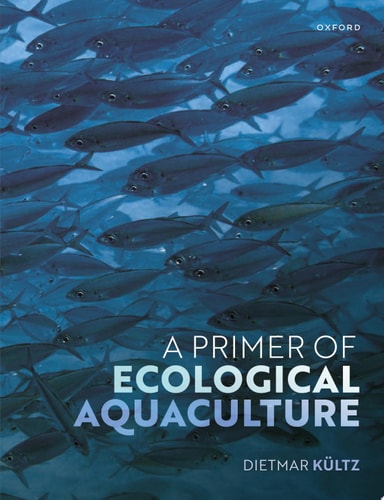
A Primer of Ecological Aquaculture
0
0
As an Amazon Associate and affiliate partner, Menrva Books earns from qualifying purchases. Learn more
Author Description
Aquaculture exemplifies the ongoing global struggle to strike a sustainable balance between the conflicting needs of a rapidly increasing world population, human health, ecosystem health, the welfare of wild and domesticated animals, and the economic principles of globalized economies. On the one hand, aquaculture has great potential for providing us with a healthy and nutritious food supply whilst alleviating pressure on captive fisheries and reducing fisheries-induced habitat destruction, overfishing, genetic modification of wild populations, and wholesale waste of bycatch. On the other hand, aquaculture relies heavily on clean water, an increasingly precious (and dwindling) resource that is subject to intense pressure of being used for many competing objectives.This concise primer introduces students to the basic concepts, opportunities, and challenges of aquaculture with an emphasis on ecological considerations. It provides a critical assessment of current aquaculture practices from a broad, interdisciplinary perspective and from the standpoint of how best to align the two major (and often conflicting) goals of future aquaculture development: minimizing reliance on ecosystem services whilst maximizing productivity.A Primer of Ecological Aquaculture provides an accessible and authoritative overview for a wide range of undergraduate majors ranging from biology, engineering, and environmental policy to business and management. It will also appeal to a more general academic audience who wish to gain a current overview of the field.
Menrva's Summary
THE THESIS
This book investigates the fundamental challenge of balancing global food production demands with the preservation of aquatic ecosystem health and sustainability. Dietmar Kültz, a specialist in environmental physiology, synthesizes interdisciplinary data to evaluate the current state of aquaculture. He presents a framework that prioritizes the alignment of economic productivity with the minimization of ecological impact, arguing that future development must reconcile these often-competing objectives.
THE SCOPE MAP
What You Will Find
- Analysis of the tension between global food security and the conservation of water resources.
- Evaluation of current aquaculture practices through an interdisciplinary lens including biology, engineering, and policy.
- Assessment of the environmental costs associated with industrial fish farming versus the benefits of reduced pressure on wild fisheries.
- Methodological frameworks for optimizing productivity while maintaining ecosystem services.
THE AUTHORITY PERSPECTIVE
Experts identify this text as a foundational resource for undergraduate students across diverse disciplines such as environmental policy and biological sciences. Readers frequently note the clarity of the prose, which effectively distills complex ecological and economic trade-offs into an accessible format.
Page Count:
304
Publication Date:
2022-12-06
Publisher:
Oxford University Press
ISBN-10:
0198850220
ISBN-13:
9780198850229
Science
Marine Biology
Ecology
Aquaculture
Sustainability
Biology
Community Tags
Other Editions(3)


Similar Books