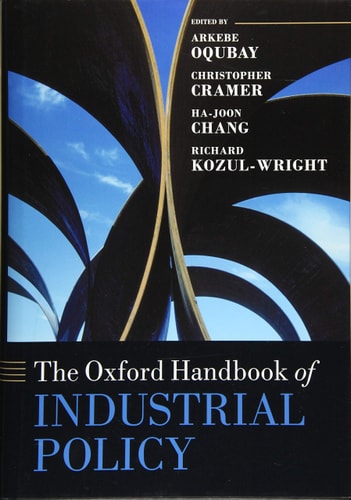
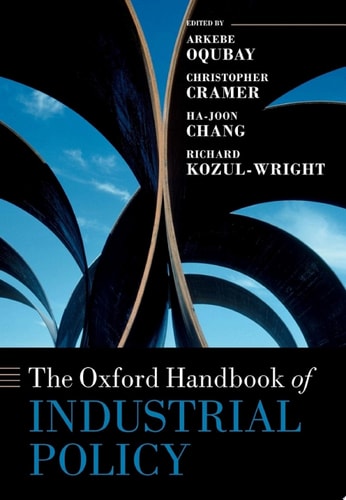
The Oxford Handbook of Industrial Policy
0
0
As an Amazon Associate and affiliate partner, Menrva Books earns from qualifying purchases. Learn more
Author Description
Industrial policy has long been regarded as a strategy to encourage sector-, industry-, or economy-wide development by the state. It has been central to competitiveness, catching up, and structural change in both advanced and developing countries. It has also been one of the most contested perspectives, reflecting ideologically inflected debates and shifts in prevailing ideas. There has lately been a renewed interest in industrial policy in academic circles and international policy dialogues, prompted by the weak outcomes of policies pursued by many developing countries under the direction of the Washington Consensus (and its descendants), the slow economic recovery of many advanced economies after the 2008 global financial crisis, and mounting anxieties about the national consequences of globalization.The Oxford Handbook of Industrial Policy presents a comprehensive review of and a novel approach to the conceptual and theoretical foundations of industrial policy. The Handbook also presents analytical perspectives on how industrial policy connects to broader issues of development strategy, macro-economic policies, infrastructure development, human capital, and political economy. By combining historical and theoretical perspectives, and integrating conceptual issues with empirical evidence drawn from advanced, emerging, and developing countries, The Handbook offers valuable lessons and policy insights to policymakers, practitioners and researchers on developing productive transformation, technological capabilities, and international competitiveness. It addresses pressing issues including climate change, the gendered dimensions of industrial policy, global governance, and technical change.Written by leading international thinkers on the subject, the volume pulls together different perspectives and schools of thought from neo-classical to structuralist development economists to discuss and highlight the adaptation of industrial policy in an ever-changing socio-economic
Menrva's Summary
THE THESIS
This volume investigates the conceptual foundations, historical evolution, and contemporary relevance of industrial policy as a mechanism for state-led economic development. Edited by Arkebe Oqubay, Ha-Joon Chang, Christopher Cramer, and Richard Kozul-Wright, the text synthesizes diverse economic schools of thought—ranging from neo-classical to structuralist—to address why industrial policy has regained prominence following the limitations of the Washington Consensus and the 2008 financial crisis. The contributors provide a rigorous framework for understanding how productive transformation and technological capabilities can be fostered in both advanced and developing economies.
THE SCOPE MAP
What You Will Find
- Theoretical foundations and historical case studies of industrial policy across diverse global economies.
- Analytical connections between industrial strategy and macro-economic policy, infrastructure, and human capital development.
- Empirical evidence addressing modern challenges such as climate change, gender equity, and global governance.
- Comparative perspectives on structural change and international competitiveness in emerging and advanced markets.
THE AUTHORITY PERSPECTIVE
Experts recognize this volume as a comprehensive, multi-disciplinary reference that bridges the gap between theoretical economic debate and practical policy implementation. Readers frequently note the academic density of the prose, which serves as a foundational resource for researchers and policymakers navigating the complexities of modern economic development.
Page Count:
992
Publication Date:
2020-12-20
Publisher:
Oxford University Press
ISBN-10:
0198862423
ISBN-13:
9780198862420
Economics
Industrial Policy
Globalization
Public Policy
Community Tags
Other Editions(2)
Similar Books




Reader Comments
Share Your Thoughts
No comments yet. Be the first to share your thoughts!