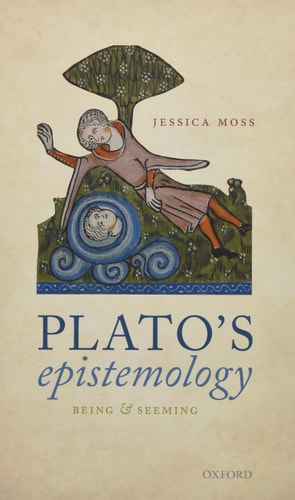
Plato's Epistemology: Being and Seeming
0
0
As an Amazon Associate and affiliate partner, Menrva Books earns from qualifying purchases. Learn more
Author Description
Plato's Epistemology: Being and Seeming presents an original interpretation of one of the central topics in Plato's work: epistemology. Jessica Moss argues that Plato's epistemology is radically different from our own.Going against the grain of recent scholarship, and drawing on ancient interpretations of Plato, Jessica Moss argues that Plato is not best understood as studying what we now call knowledge and belief. Instead, Moss proposes that the central players in his epistemology, episteme and doxa, are each essentially to be understood as cognition of a certain kind of object. Episteme is cognition of what Is - where this turns out to mean that it is a deep grasp of ultimate reality. Doxa is cognition of what seems - where this turns out to mean that it is atheoretical thought that mistakes images for reality. The book defends these characterizations by arguing that they explain important features of Plato's epistemology. In particular, it shows that they underlie and make sense of a view which was long attributed to Plato but has recently been deemed "outrageous": that there is no doxa of Forms, and no episteme of perceptibles. Finally, Moss contends that Plato's epistemology is so different from modern epistemology because it is motivated by his central ethical and metaphysical views. As the Cave allegory illustrates, he holds that the goal of life is to be in contact with genuine Being, and that the greatest obstacle to this goal is our tendency to rest content with appearances. Therefore, when Plato turns to epistemological investigations, the distinction he finds most salient is that between cognition of what Is and cognition of what seems.
Menrva's Summary
THE THESIS
This book investigates the core question of how Plato’s epistemology functions by re-evaluating the fundamental nature of episteme and doxa. Jessica Moss, a scholar of ancient philosophy, challenges contemporary interpretations that frame Plato’s work through modern epistemological lenses. By drawing on ancient readings and textual analysis, she argues that Plato’s cognitive categories are defined by their objects—specifically, the distinction between ultimate reality and mere appearance—rather than modern definitions of knowledge and belief.
THE SCOPE MAP
What You Will Find
- A re-examination of the definitions of episteme and doxa within the Platonic corpus.
- An analysis of the relationship between cognition and the nature of objects, specifically Forms versus perceptibles.
- A synthesis of Plato’s metaphysical and ethical commitments as the primary drivers of his epistemological framework.
- An interpretation of the Cave allegory as a foundational model for understanding the human cognitive condition.
THE AUTHORITY PERSPECTIVE
Scholars and students of ancient philosophy frequently note that this text provides a rigorous challenge to standard modern interpretations of Plato. Experts highlight the book as a significant contribution to the field for its focus on the metaphysical underpinnings of Platonic thought.
Page Count:
272
Publication Date:
2021-03-11
Publisher:
Oxford University Press
ISBN-10:
0198867409
ISBN-13:
9780198867401
Philosophy
Epistemology
Metaphysics
Plato
Community Tags
Similar Books