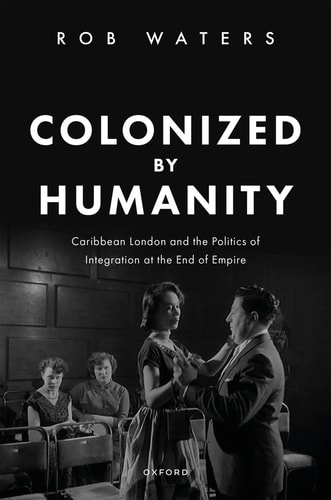
Colonized by Humanity: Caribbean London and the Politics of Integration at the End of Empire
0
0
As an Amazon Associate and affiliate partner, Menrva Books earns from qualifying purchases. Learn more
Author Description
'Colonization through a process of affection', wrote the London-based Barbadian novelist George Lamming in 1960, was 'the worst form of colonization'. Lamming's London was marked by the violent currents of racism―some seen, many disavowed. But the operations of race, the putting-in-place of its hierarchies, the destructions of the self that its logics entailed, exceeded only expressions of violence and hatred. It was in 'affection', too, that colonialism's racial visions operated. It was not only among the illiberals, but among the liberals, that colonization continued its hold on metropolitan culture. This was colonization, as Lamming would also put it, by humanity.Colonized by Humanity is a study of racial liberalism at the end of empire. It uncovers the projects to cultivate racial integration developed in the two decades between the arrival of the Empire Windrush and the passage of the first Race Relations Act. These were the years that integrationism took hold as a social phenomenon, its reflexes lodged deep in an English culture that took the idea of 'tolerance' as its watchword. It was a culture that re-inscribed race even as it aimed at overcoming its discriminations.Caribbean London is at the heart of this story. It was in the capital that integration projects multiplied fastest, and it was the multicultural capital that provided integrationism's imaginative geographies. Viewing integrationism through the eyes of Caribbean Londoners, Colonized by Humanity allows us to see it as they did, with its colonial and racial dynamics up close.
Menrva's Summary
THE THESIS
This book investigates how racial liberalism and integrationist projects in post-war London functioned as a subtle, pervasive form of colonial control at the end of the British Empire. Dr. Rob Waters, a scholar of modern British history, examines the period between the arrival of the Empire Windrush and the 1965 Race Relations Act. He argues that the English culture of 'tolerance' often re-inscribed racial hierarchies rather than dismantling them, effectively colonizing the Caribbean experience through the guise of humanitarian integration.
THE SCOPE MAP
What You Will Find
- Analysis of integrationist social projects in London during the 1950s and 1960s.
- Examination of the role of 'racial liberalism' in maintaining colonial power dynamics.
- Perspectives from Caribbean Londoners regarding their lived experiences of metropolitan racism.
- Historical critique of the 'tolerance' narrative within British cultural and political institutions.
THE AUTHORITY PERSPECTIVE
Scholars and historians recognize this work as a significant contribution to the study of post-war British race relations and the legacy of empire. Readers frequently note the academic rigor of the prose and the author's ability to synthesize complex social theories with historical archival research.
Page Count:
320
Publication Date:
2024-01-01
Publisher:
Oxford University Press
ISBN-10:
0198879830
ISBN-13:
9780198879831
History
Great Britain
British History
Race Relations
Sociology
Caribbean Studies
Community Tags
Similar Books