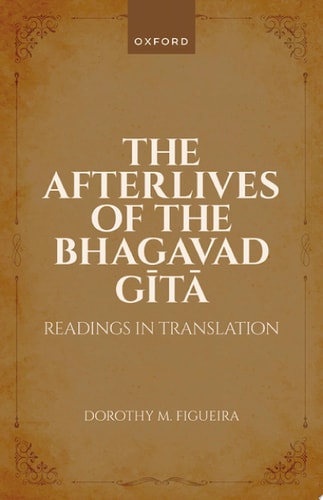
The Afterlives of the Bhagavad Gita: Readings in Translation
0
0
As an Amazon Associate and affiliate partner, Menrva Books earns from qualifying purchases. Learn more
Author Description
This volume stems from the understanding that historiographical analyses of the Gita's reception overlook the element of its translation. It begins with this recognition and posits translation as fundamental to any understanding of the Gita's reception. It examines in depth and compares how translations of the Gita do not seek the same aims in all places and at all times and recognizes that translation theories and methodologies are not uniform across nations and eras. Therefore, this volume looks at insolites (unusual, strange) readings of the Gita and how they seek to fill the hermeneutical gap between readings tied to its canonical and scriptural status and those that are distant from the text's tradition.
Menrva's Summary
THE THESIS
This volume investigates how the act of translation serves as a primary driver in the historical reception and interpretation of the Bhagavad Gita. Prof. Dorothy M. Figueira, a scholar of comparative literature, argues that traditional historiography often neglects the linguistic and cultural shifts inherent in translation. By examining diverse methodologies across different eras and nations, the author posits that translation is not a neutral act but a hermeneutical tool that bridges the gap between canonical scripture and localized, often unconventional, readings.
THE SCOPE MAP
What You Will Find
- Comparative analysis of translation theories and methodologies across various historical eras.
- Examination of 'insolites' or unusual readings of the Bhagavad Gita that deviate from traditional interpretations.
- Exploration of the hermeneutical gap between canonical status and cross-cultural reception.
- Case studies demonstrating how translation aims shift based on national and temporal contexts.
THE AUTHORITY PERSPECTIVE
Scholars in the fields of translation studies and South Asian religious history identify this work as a critical intervention in how sacred texts are analyzed through the lens of cross-cultural transmission. Readers frequently note the academic density of the prose and the author's rigorous approach to comparative methodology.
Page Count:
386
Publication Date:
2023-10-21
Publisher:
Oxford University Press
ISBN-10:
0198873484
ISBN-13:
9780198873488
History
Philosophy
Religion
Literary Criticism
Translation Studies
Community Tags
Similar Books