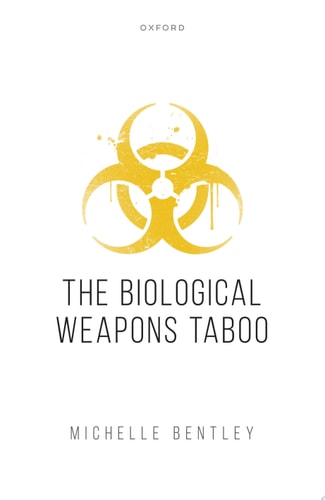
The Biological Weapons Taboo
0
0
As an Amazon Associate and affiliate partner, Menrva Books earns from qualifying purchases. Learn more
Author Description
The non-use of biological weapons has been described as the 'great mystery of biological warfare.' The Biological Weapons Taboo solves that mystery by analysing the bioweapons taboo, in the first comprehensive study of the concept.Bentley explains precisely why bioweapons are perceived as repulsive and how this sentiment is consequently expressed in the form of political behaviours, including the refusal to engage in biological aggression. Drawing on extensive archival evidence, this volume looks back on United States' foreign policy decision-making (particularly in relation to the Geneva Protocol and the Biological Weapons Convention) to demonstrate how and why the taboo has comprised a decisive factor in shaping both biowarfare strategy and political rhetoric - and why the taboo needs to be recognised as a necessary consideration in the study of bioweapons.In analysing a taboo, the volume also takes the debate on international norms forward by questioning and challenging the wider analytic comprehension of 'taboo' itself. Rejecting current definitions of the concept as inadequate, Bentley proposes a new and original model of understanding based on the normative characteristics of disgust, stigmatization, and fetishization.
Menrva's Summary
THE THESIS
This book investigates why biological weapons have remained largely unused in modern warfare by analyzing the development and influence of the 'bioweapons taboo.' Dr. Michelle Bentley, a scholar in international relations and security studies, utilizes extensive archival research to examine United States foreign policy decisions regarding the Geneva Protocol and the Biological Weapons Convention. She argues that the aversion to biological weapons is not merely a strategic choice but a complex normative construct that shapes political rhetoric and state behavior.
THE SCOPE MAP
What You Will Find
- Historical analysis of United States foreign policy and bioweapons decision-making.
- A theoretical framework defining the taboo through the lenses of disgust, stigmatization, and fetishization.
- Primary source evidence from international treaties including the Geneva Protocol and the Biological Weapons Convention.
- A critical evaluation of existing international relations theories regarding norms and taboos.
THE AUTHORITY PERSPECTIVE
Experts in international security identify this work as a significant contribution to the study of norms and chemical/biological warfare. Readers frequently note the academic rigor of the text and its utility for students of political science and history.
Page Count:
288
Publication Date:
2024-01-01
Publisher:
Oxford University Press
ISBN-10:
0198892152
ISBN-13:
9780198892151
History
Politics
Ethics
International relations
World politics
Military Strategy
Weapons & Warfare
Specific Topics
Community Tags
Similar Books