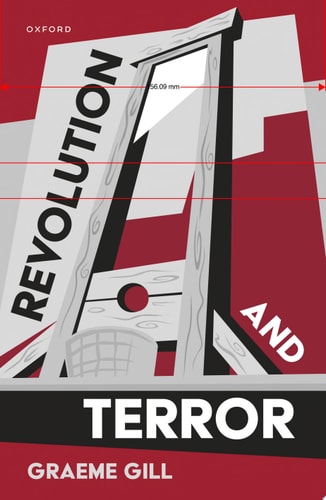
Revolution and Terror
0
0
As an Amazon Associate and affiliate partner, Menrva Books earns from qualifying purchases. Learn more
Author Description
This book is a study of the relationship between revolution and terror. Historically many have claimed that revolution inevitably devolves into terror, best reflected in the way in which after coming to power the revolutionary elite turns on itself, and one section of it uses terrorist means to eliminate another section. This thesis originally stemmed from the French revolution but has more recently also been applied to the Russian and the Chinese revolutions. Graeme Gill argues that in order to understand the relationship between revolution and terror, it is necessary to distinguish between different types of terror. There are three such types: revolutionary terror, in which the aim is to destroy enemies and thereby consolidate the regime; transformational terror, designed to drive the politico-socio-economic transformation of society that is the purpose of the 'great' revolutions; and inverted terror, which is when terror is turned against part of the elite and regime more broadly. The analysis explains how these different types of terror are related to the revolutionary seizure of power, showing that revolutionary and transformational terror are organically connected to revolution while for inverted terror the connection is mediated through the leader. The argument is prosecuted through detailed analysis of the French, Russian, and Chinese revolutions. The study ends by assessing the contemporary salience of the lessons of the great revolutions in the light of the low level of violence in the negotiated revolutions of 1989.
Menrva's Summary
THE THESIS
This work investigates the causal relationship between revolutionary movements and the subsequent implementation of state-sponsored terror. Graeme Gill, a scholar of political systems, examines the historical trajectory of major revolutions to determine why regimes often resort to violence against their own members. By analyzing the French, Russian, and Chinese revolutions, the author constructs a framework that categorizes terror into three distinct types: revolutionary, transformational, and inverted. This classification allows for a nuanced understanding of how violence functions as a tool for regime consolidation and societal restructuring.
THE SCOPE MAP
What You Will Find
- A comparative analysis of the French, Russian, and Chinese revolutions.
- A tripartite framework distinguishing between revolutionary, transformational, and inverted terror.
- An examination of the role of leadership in mediating internal regime violence.
- A concluding assessment of how modern negotiated revolutions contrast with historical patterns of violence.
THE AUTHORITY PERSPECTIVE
Scholars and students of political history frequently cite this text for its clear categorization of state violence and its rigorous comparative methodology. The prose is noted for its academic precision, making it a valuable resource for those studying the mechanics of revolutionary governance and political instability.
Page Count:
304
Publication Date:
2024-01-01
Publisher:
Oxford University Press
ISBN-10:
0198901100
ISBN-13:
9780198901105
History
Politics
Russian History
Revolution
Chinese History
European History
Systems Theory
Community Tags
Similar Books