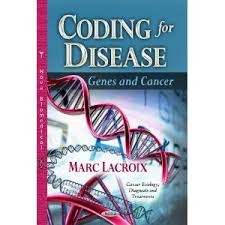
Coding for Disease
0
0
As an Amazon Associate and affiliate partner, Menrva Books earns from qualifying purchases. Learn more
Author Description
Book Description: Cancer is characterized by uncontrolled cell division and the potential of the cells to invade surrounding tissues and spread around the body. Most of these changes in cellular behavior are the result of alterations in the function or levels of the proteins that control these processes. And these alterations are, in turn, usually caused by modifications at the DNA level. Indeed, cancer is now recognized as being essentially a disease caused by mutation, or dysregulated expression, of genes. Of the estimated 30,000 genes in the human genome, currently more than 250 are known to play an important role in the development of cancer, either sporadic or familial. In some cases, their effects result from gene fusion, due to translocation for instance, or from amplification of a chromosomal region. During the last years, attention has largely shifted from the identification of rare high-risk genetic mutations to a hunt for lower risk gene polymorphisms, many of which are likely to be common within the population. Another increasingly investigated field is epigenetics, which relates to abnormal and prolonged changes in the mechanisms that alter gene expression and activity, without involving changes in genetic sequence.
Menrva's Summary
THE THESIS
The fundamental mechanisms of cancer are rooted in genetic alterations and dysregulated gene expression. This book explores how mutations, gene fusions, amplifications, and epigenetic changes contribute to uncontrolled cell division and tissue invasion. It details the roles of specific genes and the shift in research focus from rare high-risk mutations to common low-risk polymorphisms. The text examines the intricate relationship between DNA modifications and the development of both sporadic and familial cancers.
THE SCOPE MAP
- The genetic basis of cancer, including mutations and gene dysregulation.
- The role of specific genes (over 250 identified) in cancer development.
- Mechanisms such as gene fusion, translocation, and chromosomal amplification.
- The shift from identifying rare high-risk mutations to common low-risk polymorphisms.
- The field of epigenetics and its impact on gene expression without altering DNA sequence.
- The potential for these genetic changes to lead to uncontrolled cell division and tissue invasion.
THE AUTHORITY PERSPECTIVE
This book delves into the molecular underpinnings of cancer, focusing on genetic and epigenetic factors. It appears to offer a comprehensive overview of current scientific understanding regarding the genetic causes of cancer, suitable for students or researchers in the field. The text likely synthesizes complex genetic information into a structured analysis of disease development.
Page Count:
200
Publication Date:
2013-01-01
ISBN-10:
1622578171
ISBN-13:
9781622578177
Science
Non-Fiction
Oncology
Genetics
Bioinformatics
Community Tags
Similar Books