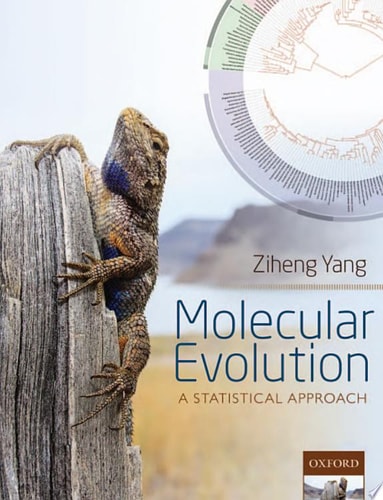
Molecular Evolution: A Statistical Approach
0
0
As an Amazon Associate and affiliate partner, Menrva Books earns from qualifying purchases. Learn more
Author Description
Studies of evolution at the molecular level have experienced phenomenal growth in the last few decades, due to rapid accumulation of genetic sequence data, improved computer hardware and software, and the development of sophisticated analytical methods. The flood of genomic data has generated an acute need for powerful statistical methods and efficient computational algorithms to enable their effective analysis and interpretation. Molecular Evolution: a statistical approach presents and explains modern statistical methods and computational algorithms for the comparative analysis of genetic sequence data in the fields of molecular evolution, molecular phylogenetics, statistical phylogeography, and comparative genomics. Written by an expert in the field, the book emphasizes conceptual understanding rather than mathematical proofs. The text is enlivened with numerous examples of real data analysis and numerical calculations to illustrate the theory, in addition to the working problems at the end of each chapter. The coverage of maximum likelihood and Bayesian methods are in particular up-to-date, comprehensive, and authoritative. This advanced textbook is aimed at graduate level students and professional researchers (both empiricists and theoreticians) in the fields of bioinformatics and computational biology, statistical genomics, evolutionary biology, molecular systematics, and population genetics. It will also be of relevance and use to a wider audience of applied statisticians, mathematicians, and computer scientists working in computational biology.
Menrva's Summary
THE THESIS
This text addresses the critical need for robust statistical methods and computational algorithms required to analyze the vast quantities of genetic sequence data generated by modern genomic research. Ziheng Yang, a recognized authority in computational biology, provides a framework for interpreting molecular evolution through the lens of comparative genomics and phylogenetics. The book prioritizes conceptual clarity and practical application, utilizing real-world data examples to bridge the gap between theoretical models and empirical research.
THE SCOPE MAP
What You Will Find
- Comprehensive coverage of maximum likelihood and Bayesian inference methods.
- Methodologies for molecular phylogenetics and statistical phylogeography.
- Practical computational algorithms for sequence data analysis.
- Numerical examples and end-of-chapter problems for skill reinforcement.
Scope Limits
- The text assumes a graduate-level background in biology or statistics and does not provide introductory primers for basic genetics.
- It focuses on statistical and computational frameworks rather than exhaustive mathematical proofs.
THE AUTHORITY PERSPECTIVE
Experts and researchers frequently cite this work as a foundational resource for understanding the statistical underpinnings of molecular evolution. Readers note that the text is highly technical and serves as an essential reference for graduate students and professionals in bioinformatics.
Page Count:
507
Publication Date:
2014-01-01
Publisher:
OUP Oxford
ISBN-10:
0191023310
ISBN-13:
9780191023316
Science
Genetics
Bioinformatics
Phylogeny
Evolution
Statistics
Evolutionary Biology