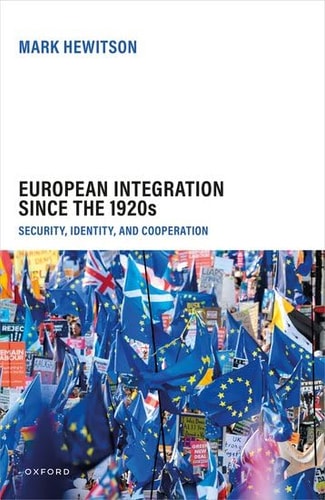
European Integration Since the 1920s: Security, Identity, and Cooperation
0
0
As an Amazon Associate and affiliate partner, Menrva Books earns from qualifying purchases. Learn more
Author Description
Brexit, Populism And Euroscepticism Seem To Have Challenged Old Assumptions About European Integration And Raised The Prospect Of Disintegration. This Book Re-examines Why The European Union And Its Forerunners Were Created And Investigates How And Why They Have Changed. It Links Contemporary Events To Historical Explanation, Arguing That There Were Long-term Sets Of Conditions, Dating Back To The 1920s, Which Pushed European Governments To Cooperate Economically And To Try To Resolve Their Diplomatic Differences. The Study Is Thematic, Focusing On The Most Important Aspects Of European Integration And Explaining Why Member States Have Decided To Carry Out - Or Have Consented To - The Unique Experiment Of The European Union-- Provided By Publisher.
Menrva's Summary
THE THESIS
This book investigates the historical origins and evolving motivations behind European integration, questioning why member states have consistently pursued cooperation despite contemporary challenges like Brexit and populism. Mark Hewitson, a scholar of European history, utilizes a thematic framework to connect modern political developments to long-term structural conditions established in the 1920s. He argues that the European Union is not merely a recent construct but the result of decades of diplomatic efforts to resolve security concerns and economic instability through institutionalized cooperation.
THE SCOPE MAP
What You Will Find
- Historical analysis of European diplomatic and economic cooperation from the 1920s to the present.
- Examination of the shifting motivations for integration, including security, identity, and economic necessity.
- Assessment of the impact of Euroscepticism and populism on the stability of the European Union.
- Thematic exploration of why member states consent to the unique supranational experiment of the EU.
THE AUTHORITY PERSPECTIVE
Experts recognize this work as a significant contribution to understanding the historical continuity of European institutional development. Readers frequently note the academic rigor of the text, which provides a necessary long-term context for current debates surrounding European disintegration.
Page Count:
544
Publication Date:
2025-02-14
Publisher:
Oxford University Press
ISBN-10:
0198915942
ISBN-13:
9780198915942
History
Politics
European Union
European History
International relations
Specific Topics
World politics
Europe
Community Tags
Similar Books