Enemies in the Empire: Civilian Internment in the British Empire during the First World War
0
0
As an Amazon Associate and affiliate partner, Menrva Books earns from qualifying purchases. Learn more
Author Description
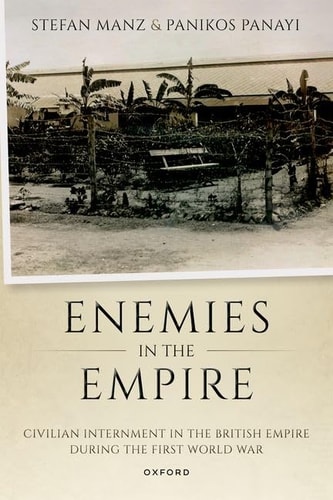
During the First World War, Britain was the epicentre of global mass internment and deportation operations. Germans, Austro-Hungarians, Turks, and Bulgarians who had settled in Britain and its overseas territories were deemed to be a potential danger to the realm through their ties with the Central Powers and were classified as 'enemy aliens'. A complex set of wartime legislation imposed limitations on their freedom of movement, expression, and property possession. Approximately 50,000 men and some women experienced the most drastic step of enemy alien control, namely internment behind barbed wire, in many cases for the whole duration of the war and thousands of miles away from the place of arrest. Enemies in the Empire is the first study to analyse British internment operations against civilian 'enemies' during the First World War from an imperial perspective. The narrative takes a three-pronged approach. In addition to a global examination, the volume demonstrates how internment operated on a (proto-) national scale within the three selected case studies of the metropole (Britain), a white dominion (South Africa), and a colony under direct rule (India). Stefan Manz and Panikos Panayi then bring their study to the local level by concentrating on the three camps Knockaloe (Britain), Fort Napier (South Africa), and Ahmednagar (India), allowing for detailed analyses of personal experiences. Although conditions were generally humane, the operations caused widespread suffering. The study argues that the British Empire played a key role in developing civilian internment as a central element of warfare and national security on a global scale.
Menrva's Summary
THE THESIS
This study investigates the systematic implementation of civilian internment and deportation operations across the British Empire during the First World War. Authors Panikos Panayi and Stefan Manz, both established historians of migration and conflict, utilize a multi-scalar analytical framework to examine how the British state classified and detained 'enemy aliens.' By synthesizing archival evidence from the metropole, dominions, and colonies, the authors argue that the British Empire was instrumental in establishing civilian internment as a standard mechanism of global national security and wartime policy.
THE SCOPE MAP
What You Will Find
- A comparative analysis of internment policies across Britain, South Africa, and India.
- Detailed case studies of specific internment camps: Knockaloe, Fort Napier, and Ahmednagar.
- An examination of wartime legislation regarding freedom of movement, property rights, and civil liberties.
- Primary source evidence detailing the personal experiences of detainees and the broader impact of imperial security operations.
THE AUTHORITY PERSPECTIVE
Experts recognize this work as a foundational study for understanding the global reach of British wartime internment policies. Scholars frequently note the rigorous archival research and the effective use of a three-tiered analytical approach to demonstrate the scale of these operations.
Page Count:
384
Publication Date:
2024-09-24
Publisher:
Oxford University Press
ISBN-10:
0198912153
ISBN-13:
9780198912156
Politics
History
Imperial History
World politics
Europe
Military History
Specific Topics
World War
Community Tags
Similar Books