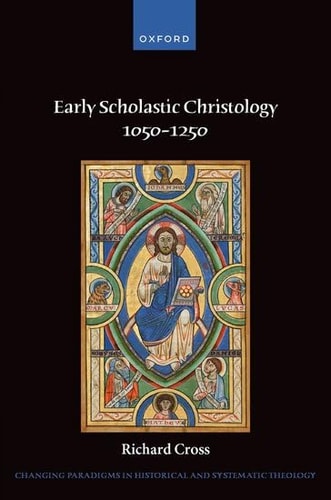
Early Scholastic Christology 1050-1250
0
0
As an Amazon Associate and affiliate partner, Menrva Books earns from qualifying purchases. Learn more
Author Description
This Book Traces Developments In Christology-and Specifically The Metaphysics Of The Union Of Divine And Human Natures In One Person-from 1050 (the Age Of Anselm Of Canterbury) To 1250 (the Age Of Albert The Great). During The First Part Of The Period, The Key Issue Is The Conflict Between Augustine's Homo Assumptus (assumed Man) Christology, Defended By The Victorines, And That Of Boethius's Chalcedonian Christology, Defended By Gilbert Of Poitiers (sometimes Known As The 'subsistence' Theory. By 1180, The Latter Of These Was Almost Universally Accepted. A Third View, Apparently Accepted By Peter Lombard Among Others, According To Which It Is Not True That Christ As Man Is Something-the Non-aliquid Christology-was Condemned In 1177. The Second Part Of The Book Traces The Way In Which Theologians Attempted To Develop The Presentation Of Conciliar Christology By Working Out Inchoate Solutions To Some Of The Metaphysical Questions That The Issue Raises: What Is The Nature Of The Hypostatic Union Between The Two Natures, Or The Human Nature And The Divine Person-is It Something Created, Or Something Uncreated? And, Given That The Human Nature Is A Particular Substance, What Prevents It From Being A Person? Theologians Used Insights From Both Of The Rejected Theories (the Homo Assumptus Christology And The Non-aliquid Christology) In Attempting To Answer These Issues. The Early Thirteenth Century Saw Both The Founding Of The Universities Of Paris And Oxford, And The Founding Of The Franciscan And Dominican Orders. The Book Explores The Impact Of These Religious Identities On The Formation Of Christological Teaching
Menrva's Summary
THE THESIS
This work investigates the evolution of Christological metaphysics and the conceptualization of the hypostatic union between 1050 and 1250. Professor Richard Cross examines the transition from Augustinian and Boethian frameworks to the scholastic developments that defined the high medieval period. By analyzing the shift from the 'homo assumptus' and 'non-aliquid' theories toward a standardized Chalcedonian model, the author provides a rigorous account of how theological debates were shaped by the emergence of university structures and mendicant orders.
THE SCOPE MAP
What You Will Find
- Analysis of the transition from Augustinian Christology to the Boethian-Chalcedonian consensus.
- Examination of the metaphysical status of Christ's human nature and the nature of the hypostatic union.
- Historical documentation of the condemnation of the 'non-aliquid' Christology in 1177.
- Investigation into the influence of the University of Paris, Oxford, and the Franciscan and Dominican orders on theological formation.
THE AUTHORITY PERSPECTIVE
Scholars recognize this text as a precise and technically demanding examination of medieval metaphysical theology. Experts frequently highlight the author's ability to synthesize complex scholastic arguments into a coherent historical narrative for advanced students of the period.
Page Count:
304
Publication Date:
2025-01-10
Publisher:
Oxford University Press
ISBN-10:
019893601X
ISBN-13:
9780198936015
Philosophy
History
Christianity
Theology
Community Tags
Other Editions(2)

Similar Books