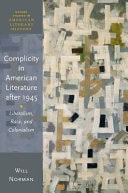
Complicity in American Literature After 1945
0
0
As an Amazon Associate and affiliate partner, Menrva Books earns from qualifying purchases. Learn more
Author Description
Complicity In American Literature After 1945 Offers A Literary And Intellectual History Of The Idea Of Complicity In The United States, Proposing A New Frame For Understanding American Literature In The Period. The Term Complicity Derives Etymologically From The Latin Complicāre, Which Means To Fold. If One Is Complicit, One Is Folded Into A Larger System Of Social Harm Over Which One Has Little Or No Direct Control. In The Period From 1945 To The Early 1970s, Complicity With Structural Racism Became A Central Concern For American Writing And Thought, As It Grappled With The Holocaust, Colonialism, The Vietnam War, And Racial Domination At Home In The United States. Writers And Thinkers Grasped Complicity Both As A Social Phenomenon To Be Represented And As A Problem Threatening To Enfold Writing Itself. In Addressing Complicity, Intellectuals Were Obliged To Reconsider Their Social Role And To Innovate Means Of Literary Expression Capable Of Articulating New Experiences Of Guilt And Responsibility. Complicity In American Literature After 1945 Tells The Story Of That Process As It Took Place Across Several Genres, From Highbrow Short Stories To Crime Fiction, And From Experimental Metafiction To The Reportage Essays Of The New Journalism. It Argues That The History Of Racial Complicity Is Inseparable From The History Of Liberalism, And Shows How We Can Make Sense Of Our Present Preoccupations With Complicity By Studying Its Origins In The Past-- Provided By Publisher.
Menrva's Summary
THE THESIS
How did the concept of complicity evolve as a central ethical and aesthetic problem in American literature and intellectual life between 1945 and the early 1970s? Will Norman, a scholar of American literature, examines the etymological and social dimensions of complicity, defining it as the state of being 'folded' into systemic social harm. By analyzing a diverse range of texts from the post-war era, Norman argues that writers and intellectuals were forced to innovate new modes of expression to address their own roles within structures of racism, colonialism, and global conflict. The book posits that the history of racial complicity is fundamentally linked to the development of American liberalism during this period.
THE SCOPE MAP
What You Will Find
- An intellectual history of the term complicity from its Latin roots to its modern political usage.
- Analysis of literary responses to the Holocaust, the Vietnam War, and domestic racial domination.
- Examination of various genres including highbrow short stories, crime fiction, experimental metafiction, and New Journalism.
- A critical framework connecting the evolution of literary form to the shifting responsibilities of the American intellectual.
THE AUTHORITY PERSPECTIVE
Scholars and critics recognize this work as a rigorous contribution to the study of post-1945 American intellectual history. Readers frequently note the academic density of the prose and the author's success in bridging the gap between literary theory and political history.
Page Count:
0
Publication Date:
2025-01-01
Publisher:
New York : Oxford University Press,
ISBN-10:
0198954735
ISBN-13:
9780198954736
History
American
Literary Criticism
Community Tags
Similar Books