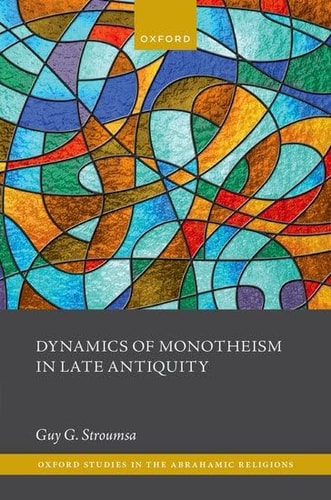
Dynamics of Monotheism in Late Antiquity
0
0
As an Amazon Associate and affiliate partner, Menrva Books earns from qualifying purchases. Learn more
Author Description
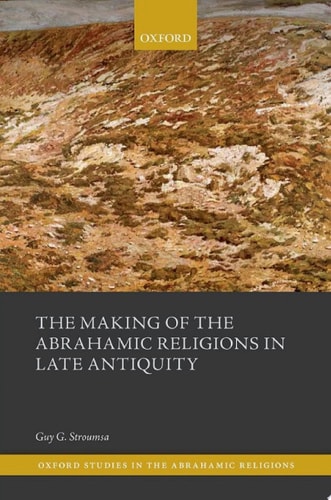
From early Christianity to the emergence of Islam, the long late antiquity denotes a truly revolutionary period in the history of religions. In many ways, religious ritual patterns and theological worldviews were then radically transformed throughout the Near East and the Mediterranean. In particular, the traditional polytheistic systems collapsed, giving way to various forms of monotheism and dualism.In Dynamics of Monotheism in Late Antiquity, Guy G. Stroumsa seeks to analyze this multifaceted revolution as a whole, rather than focusing, as is usually the case, on distinct religious communities and traditions, such as Judaism, Zoroastrianism, Gnosticism, Christianity, Manichaeism, and earliest Islam. Many of the elements of religious change in our period can be perceived as a praeparatio coranica, as it were, as they set the scene for the advent of Islam. The thrust of the book is to identify the key dynamics through which religious change happened in the kaleidoscope of religious conceptions. The analysis emphasizes the dialectics between monotheist and dualist perceptions and systems. It will also seek to identify the core elements of the Abrahamic religions in the making.
Menrva's Summary
THE THESIS
This work investigates the systemic transformation of religious landscapes in the Near East and Mediterranean during late antiquity, specifically focusing on the shift from polytheism to monotheism and dualism. Guy G. Stroumsa, a scholar of the history of religions, utilizes a comparative framework to examine the interconnected evolution of Judaism, Christianity, Zoroastrianism, Gnosticism, Manichaeism, and early Islam. By moving away from isolated studies of individual traditions, the author argues that these religions shared a common dynamic of change that served as a precursor to the emergence of Islam.
THE SCOPE MAP
What You Will Find
- Comparative analysis of religious shifts across the Near East and Mediterranean.
- Examination of the dialectical relationship between monotheist and dualist theological systems.
- Historical synthesis of religious change from early Christianity through the rise of Islam.
- Identification of the foundational elements that characterize the development of Abrahamic religions.
THE AUTHORITY PERSPECTIVE
Scholars and historians of late antiquity identify this text as a significant contribution to the comparative study of religious evolution. Readers frequently note the academic density of the prose and the author's ability to synthesize complex theological shifts into a coherent historical narrative.
Page Count:
200
Publication Date:
2025-11-05
Publisher:
Oxford University Press
ISBN-10:
0198973381
ISBN-13:
9780198973386
History
Religion
Philosophy
Late Antiquity
Theology
Monotheism
Community Tags
Similar Books