Universal Salvation in Late Antiquity
0
0
As an Amazon Associate and affiliate partner, Menrva Books earns from qualifying purchases. Learn more
Author Description
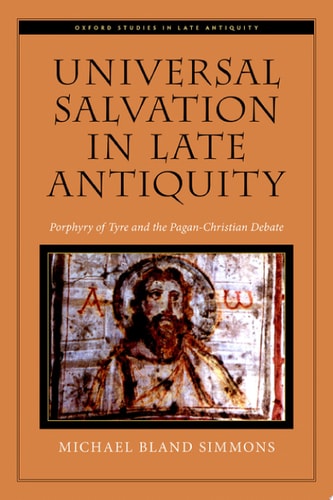
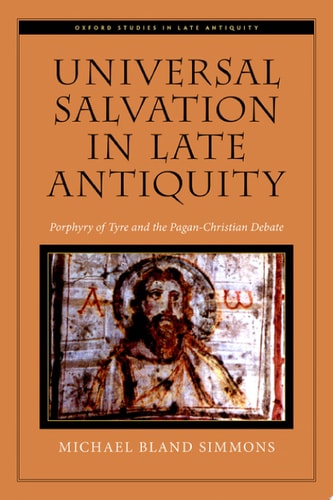
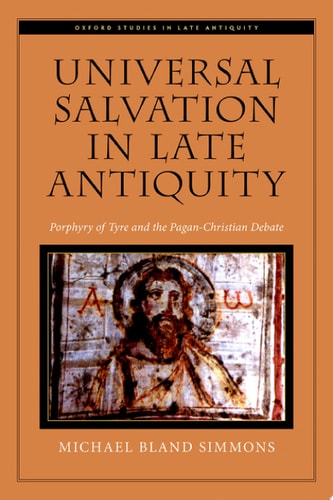
This Study Offers An In-depth Examination Of Porphyrian Soteriology, Or The Concept Of The Salvation Of The Soul, In The Thought Of Porphyry Of Tyre, Whose Significance For Late Antique Thought Is Immense. Porphyry's Concept Of Salvation Is Important For An Understanding Of Those Cataclysmic Forces, Not Always Theological, That Helped Convert The Roman Empire From Paganism To Christianity. Porphyry, A Disciple Of Plotinus, Was The Last And Greatest Anti-christian Writer To Vehemently Attack The Church Before The Constantinian Revolution. His Contribution To The Pagan-christian Debate On Universalism Can Thus Shed Light On The Failure Of Paganism And The Triumph Of Christianity In Late Antiquity. In A Broader Historical And Cultural Context This Study Will Address Some Of The Issues Central To The Debate On Universalism, In Which Porphyry Was Passionately Involved And Which Was Becoming Increasingly Significant During The Unprecedented Series Of Economic, Cultural, Political, And Military Crises Of The Third Century. As The Author Will Argue, Porphyry May Have Failed To Find One Way Of Salvation For All Humanity, He Nonetheless Arrived A Hierarchical Soteriology, Something Natural For A Neoplatonist, Which Resulted In An Integrative Religious And Philosophical System. His System Is Examined In The Context Of Other Developing Ideologies Of Universalism, During A Period Of Unprecedented Imperial Crises, Which Were Used By The Emperors As An Agent Of Political And Religious Unification. Christianity Finally Triumphed Over Its Competitors Owing To Its Being Perceived To Be The Only Universal Salvation Cult That Was Capable Of Bringing About This Unification. In Short, It Won Due To Its Unique Universalist Soteriology. By Examining A Rival To Christianity's Concept Of Universal Salvation, This Book Will Be Valuable To Students And Scholars Of Ancient Philosophy, Patristics, Church History, And Late Antiquity.
Menrva's Summary
THE THESIS
This study investigates how the Neoplatonist philosopher Porphyry of Tyre developed a hierarchical soteriology in response to the political and religious crises of the third-century Roman Empire. Archbishop Michael Bland Simmons examines Porphyry's philosophical framework to argue that the eventual triumph of Christianity over paganism was driven by the perceived superiority of the Christian universalist model in unifying a fractured empire. By analyzing Porphyry's attempts to reconcile diverse religious and philosophical systems, the author provides a scholarly assessment of the intellectual competition that defined the transition from classical paganism to the Constantinian era.
THE SCOPE MAP
What You Will Find
- An analysis of Porphyrian soteriology and its relation to Plotinian thought.
- A historical examination of third-century Roman political, economic, and military crises.
- A comparative study of pagan and Christian universalist ideologies.
Scope Limits
- The text does not provide a general history of the Roman Empire, focusing specifically on the intellectual and theological debates of the period.
- It does not cover post-Constantinian developments in depth, centering primarily on the era leading up to the Christian triumph.
THE AUTHORITY PERSPECTIVE
Scholars of late antiquity and patristics recognize this work as a rigorous examination of the philosophical tensions between pagan Neoplatonism and emerging Christian doctrine. Readers frequently note the academic density of the prose, which is intended for an audience familiar with the intricacies of ancient philosophy and church history.
Page Count:
496
Publication Date:
2015-01-01
Publisher:
Oxford University Press
ISBN-10:
0190202408
ISBN-13:
9780190202408
Philosophy
History
Late Antiquity
Patristics
Theology
Neoplatonism
Community Tags
Similar Books