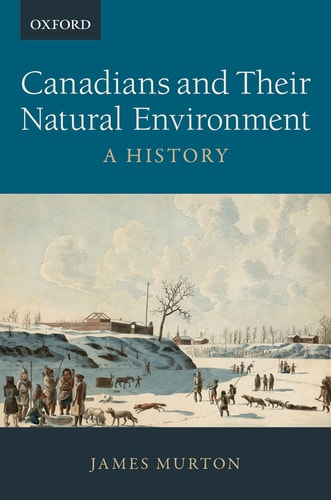
Canadians and Their Natural Environment: A History
0
0
As an Amazon Associate and affiliate partner, Menrva Books earns from qualifying purchases. Learn more
Author Description
The book is a history of how people in the territory that is now Canada have interacted with all that is non-human since the last ice age. It takes as its jumping off point the idea that the primary human interest in nature is getting the resources needed to survive: in other words, food and shelter. So concentrating on the ways in which societies in what we now call Canada have shaped access to nature in order to achieve subsistence (or survival), and the things that flow from that allows us to understand much of the human-nature relationship in this place over time. The book starts with the retreat of the glaciers and the assembling of the natural environment of Canada. It then looks at the means of survival and the different impacts on the land of Indigenous people and of pre-industrial European colonizing societies. Industrial capitalism in the later nineteenth century encouraged a new ordering and control of nature, while science both facilitated and challenged this and its effects. The latter half of the book examines the results: a massive re-engineering of nature, the development of new chemicals and materials and their presence in the environment as waste and pollution, the conservation, preservation and environmental movements, and the attempts, up to our present-day and including the crisis of climate change, to reconcile economic development with environmental protection.The book is written in a lively style that will be accessible to undergraduate students. It features a further reading section that both students and scholars new to the field will find useful and over 65 maps and illustrations. It is the first such book to propose an overall framework for understanding Canadian environmental history.
Menrva's Summary
THE THESIS
This book investigates the historical evolution of the human-nature relationship in Canada, positing that the pursuit of subsistence and resource extraction serves as the primary driver for environmental interaction. James Murton, a scholar of environmental history, utilizes a chronological framework to trace these interactions from the post-glacial era to the modern climate crisis. By analyzing the shift from Indigenous land management to industrial capitalism, the author argues that the Canadian landscape has been fundamentally re-engineered through human efforts to secure survival and economic growth.
THE SCOPE MAP
What You Will Find
- A comprehensive historical timeline beginning with the retreat of the glaciers and extending to contemporary climate change.
- Comparative analysis of land use between Indigenous societies and pre-industrial European colonizers.
- Examination of the role of industrial capitalism and scientific advancement in the systematic control of natural resources.
- Discussion of the emergence of environmental movements, pollution management, and the ongoing tension between economic development and conservation.
THE AUTHORITY PERSPECTIVE
Experts identify this work as a foundational text that provides a cohesive framework for the study of Canadian environmental history. Readers frequently note the accessibility of the prose, making it a valuable resource for both undergraduate students and researchers entering the field.
Page Count:
352
Publication Date:
2021-06-14
Publisher:
Oxford University Press
ISBN-10:
0199025460
ISBN-13:
9780199025466
History
Nature
Human ecology
Ecology
Environmental History
Canada
Community Tags
Other Editions(2)

Similar Books