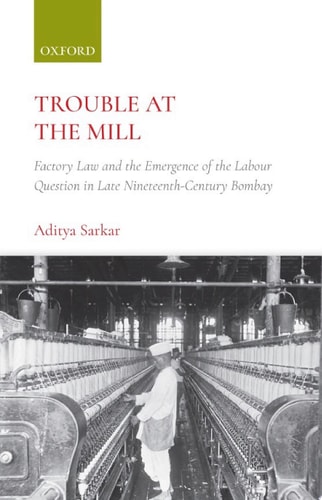
Trouble at the Mill: Factory Law and the Emergence of the Labour Question in Late Nineteenth-Century Bombay
0
0
As an Amazon Associate and affiliate partner, Menrva Books earns from qualifying purchases. Learn more
Author Description
The Colonial Administration Passed A Factory Act In 1881, Producing The First Official Definition Of ‘factory’ In Modern Indian History—as A Workplace Using Steam Power And Regularly Employing Over 100 Workers. In 1891, The Act Was Amended: Factories Were Redefined As Workplaces Employing Over 50 Workers; The Upper Age Limit Of Legal ‘protection’ Was Raised; Weekly Holidays Were Established; And Women Mill-workers Were Brought Within Its Ambit. Sarkar Analyses The Two Versions Of The Act And Reveals The Tensions Inherent Within The Project Of Protective Labour Regulation. Combining Legal And Social History, He Identifies An Emergent ‘factory Question’. The Cotton Mill Industry Of Bombay, Long Considered As One Of The Birthplaces Of Modern Indian Capitalism, Is The Principal Focal Point Of His Investigation. Factory Law, Though Experienced As A Minor Official Initiative, Connected With Some Of The Most Potent Ideological Debates Of The Age. Trouble At The Mill Explores A Shifting Set Of Themes And Raises Questions Rarely Thematized By Labour Historians—the Ideologies Of Factory Reform, The Politics Of Factory Commissions, The Routines Of Factory Inspection, And The Earliest Waves Of Strike Action In The Cotton Textile Industry In The Last Quarter Of The Nineteenth Century.
Menrva's Summary
THE THESIS
This book investigates how the implementation of colonial factory legislation in late nineteenth-century Bombay catalyzed the emergence of the 'labour question' and redefined the relationship between the state, capital, and the industrial workforce. Aditya Sarkar, a historian of modern South Asia, utilizes archival records of factory commissions and inspection reports to examine the ideological tensions embedded in early protective labor regulations. By focusing on the cotton textile industry, the author argues that these minor administrative initiatives were central to broader debates regarding capitalism, social control, and the rights of workers in colonial India.
THE SCOPE MAP
What You Will Find
- Analysis of the 1881 and 1891 Factory Acts and their shifting definitions of industrial workplaces.
- Examination of the routines and bureaucratic practices of factory inspectors in Bombay.
- Historical documentation of the earliest organized strike actions within the cotton textile industry.
- Exploration of the ideological debates surrounding protective labor reform and the politics of factory commissions.
THE AUTHORITY PERSPECTIVE
Scholars of South Asian history recognize this work as a significant contribution to the study of colonial labor relations and industrial capitalism. Readers frequently note the meticulous archival research and the author's ability to connect granular legal history to larger socio-political transformations in the nineteenth century.
Page Count:
368
Publication Date:
2018-01-01
Publisher:
OUP India
ISBN-10:
0199093296
ISBN-13:
9780199093298
History
India
Specialties
Economic History
Kindle eBooks
Categories
Asia
Labor Law
Educational Resources
Sociology
Colonial History
Labor history
Kindle Store
Community Tags
Similar Books