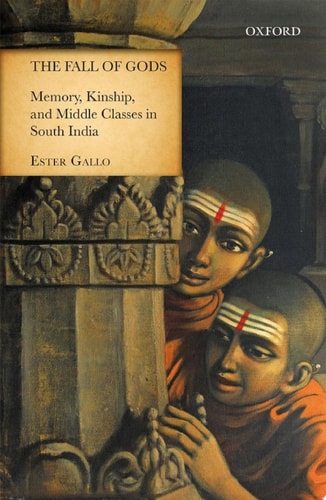
The Fall of Gods: Memory, Kinship, and Middle Classes in South India
0
0
As an Amazon Associate and affiliate partner, Menrva Books earns from qualifying purchases. Learn more
Author Description
Interrogating The Cultural Roots Of Contemporary Malayali Middle Classes, Especially The Upper Caste Nambudiri Community, The Fall Of Gods Is Based On A Decade-long Ethnography And Historico-sociological Analyses Of The Interconnections Between Colonial History, Family Memories, And Class Mobility In Twentieth-century South India. It Traces The Transformation Of Normative Structures Of Kinship Networks As The Community Moves From Colonial To Neo-liberal Modernity Across Generations. The Author Demonstrates How Past Family Experiences Of Class And Geographical Mobility (or Immobility) Are Retrieved And Reshaped In The Present As Alternative Ways Of Conceiving Kinship, Transforming The Idea Of Collective Suffering And Sacrifice, And Strengthening The Felt Necessity Of Territorial, Caste, And Religious Mingling. Rich In Anthropological Detail And Incisive Analyses, The Book Makes Original Contributions To The Understanding Of Connection Between Gendered Family Relations And Class Mobility, And Foregrounds The Complex Linkages Between Political History, Memory, And The ‘private’ Domain Of Kinship Relations In The Making Of India’s Middle Classes.
Menrva's Summary
THE THESIS
This book investigates how the Nambudiri community in South India has navigated the transition from colonial structures to neo-liberal modernity through the lens of kinship and memory. Ester Gallo, an anthropologist, utilizes a decade of ethnographic research and historical analysis to examine how the Malayali middle class reshapes family narratives to reconcile past experiences of mobility with contemporary social demands. The work argues that the private domain of kinship is not static but is actively reconstructed to negotiate caste, religious identity, and class status in modern India.
THE SCOPE MAP
What You Will Find
- Longitudinal ethnographic data spanning a decade of field research.
- Analysis of the Nambudiri community's transformation from colonial to neo-liberal social structures.
- Examination of the intersection between gendered family relations and socio-economic mobility.
- Theoretical framework connecting political history, collective memory, and the private sphere of kinship.
THE AUTHORITY PERSPECTIVE
Scholars in South Asian studies recognize this work as a significant contribution to the sociology of the Indian middle class. Experts frequently highlight the text for its rigorous anthropological detail and its nuanced approach to the interplay between historical memory and modern identity formation.
Page Count:
352
Publication Date:
2018-01-01
Publisher:
OUP India
ISBN-10:
0199091315
ISBN-13:
9780199091317
Politics
History
World politics
Categories
India
Middle class
Social Class
Sociology
Kindle eBooks
Anthropology
Marriage & Family
Kindle Store
Community Tags
Similar Books