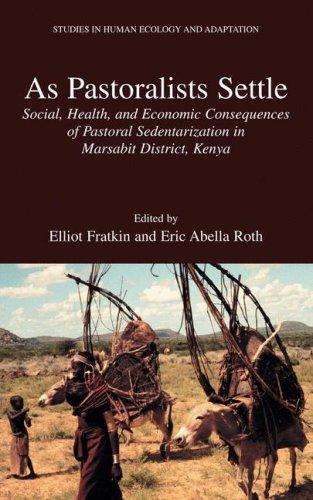
As Pastoralists Settle
0
0
As an Amazon Associate and affiliate partner, Menrva Books earns from qualifying purchases. Learn more
Author Description
The Social, Health, and Economic Consequences of Pastoral Sedentarization in Marsabit District, Northern Kenya ERICABELLA ROTH AND ELLIOT FRATKIN 1. INTRODUCTION Formerly nomadic livestock-keeping pastoralists have settled in many regions of the world in the past century. Some groups, including those in the former Soviet Union, Iran, and Israel, have settled in response to state-enforced measures; others including Saami in Norway or Bedouins in Saudi Arabia, in response to changing economic opportunities. East Africa, home to many cattle- and camel-keeping pastoral societies, has been among the most recent to change. The shift to sedentism by East African pastoralists increased d- matically in the late 20th century as a result of sharp economic, political, demographic, and environmental changes. Prolonged drought, population growth, increased reliance on ag- culture, and political insecurities including civil war and ethnic conflict have all affected the ability of pastoralists to keep their herds. Still, the majority of pastoralist households in Kenya, Ethiopia, Somalia, and Tanzania remain committed to raising livestock, even as they adapt to farming or urban residence. Pastoral production remains a major economic focus in the savannas and scrub deserts of Africa, due to both its ecological adaptability and the economic incentive to market livestock and their products (Fratkin, 2001). Pastoralists settle for a variety of reasons, some in response to ‘pushes’away from the pastoral economy, others to the ‘pulls’of urban or agricultural life.
Menrva's Summary
THE THESIS
This book investigates the multifaceted consequences of pastoralist communities transitioning from nomadic lifestyles to settled existences in Marsabit District, Northern Kenya. It examines the social, health, and economic impacts of this sedentarization, driven by a complex interplay of environmental degradation, population growth, political instability, and evolving economic opportunities. The authors draw upon extensive research to analyze how these shifts affect traditional pastoral economies and the adaptive strategies employed by households.
THE SCOPE MAP
- An analysis of the historical context of pastoral sedentarization in East Africa.
- Detailed examination of the health implications, including changes in disease patterns and access to healthcare.
- Economic assessments of the shift from livestock herding to agriculture or urban livelihoods.
- Sociocultural changes resulting from the move to settled communities.
- Case studies from Marsabit District, Northern Kenya, illustrating the diverse experiences of pastoralists.
- Discussion of the role of state policies and external economic factors in driving settlement.
- Insights into the resilience and adaptive capacities of pastoralist societies.
THE AUTHORITY PERSPECTIVE
This work is recognized as a significant contribution to the study of pastoralism in East Africa, offering a detailed ethnographic account of a critical socio-economic transition. Scholars in anthropology and development studies utilize its findings to understand the complex dynamics of cultural and economic change in arid and semi-arid regions. The book provides a robust framework for analyzing the challenges and opportunities faced by communities adapting to settled life. Its empirical data and theoretical insights are valuable for policymakers and researchers concerned with the future of pastoralist populations.
Page Count:
296
Publication Date:
2005-01-01
ISBN-10:
030648594X
ISBN-13:
9780306485947
History
Non-Fiction
Economics
Sociology
Anthropology
Social Science
Community Tags
Similar Books