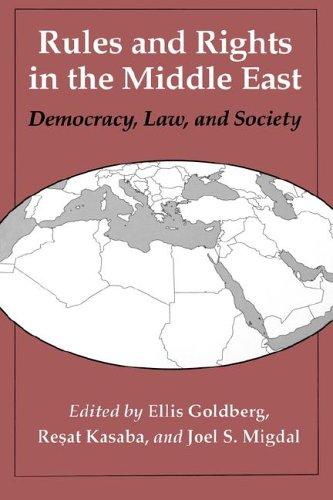
Rules and Rights in the Middle East
0
0
As an Amazon Associate and affiliate partner, Menrva Books earns from qualifying purchases. Learn more
Author Description
In a series of essays by an international group of scholars and policy makers, this book provides the first sustained look at democracy and democratic movements in the Middle East. Moving beyond a concern with the growth of Islamicist movements and nationalist states, the authors probe the historical experiences of the last hundred years and the social conflict over the past decade centering on democratic structures and processes from North Africa to Turkey, Iraq, and Iran. The essays explore from theoretical, descriptive, and political perspectives questions of democracy, freedom, and rule of law in a region that is usually thought of as lacking in all of these respects. Most comparative studies find that the Middle East does not have traits of or prospects for democracy, owing to the absence of autonomous elites, a heritage of despotism, or the nature of Islam. The authors of this book call this assumption into question by taking a more inclusive and dynamic view of democracy, seeing it as an ongoing project that unfolds on two related fronts. One of these is the continuous assertion and exercise of popular sovereignty, and the other is the equally persistent declaration and protection of fundamental human rights. Many of the essays address the central question of how to make states accountable before society, and the overriding importance of such accountability as a moral principle of political organization. In recent years there has been a marked growth in the number and influence of social movements and organizations working to expand social, political, and civil rights, and to constrain the power of the states in many countries in the Middle East. At the same time many of the regimes in the area have introduced practices and institutions designed to make their rule more democratic in order to enhance their domestic and international standing and legitimacy, as well as to spur economic growth. As a whole, the book demonstrates that neither the region's
Menrva's Summary
THE THESIS
This book challenges conventional wisdom by examining the historical experiences and ongoing social conflicts surrounding democratic structures and processes in the Middle East. Moving beyond analyses focused solely on Islamicist movements or nationalist states, the essays explore the complex interplay of popular sovereignty and fundamental human rights over the past century. The authors investigate how states can be made accountable to their societies, a moral principle often overlooked in discussions of the region. The work highlights the recent growth of social movements advocating for expanded rights and the efforts by regimes to adopt more democratic practices for legitimacy and growth.
THE SCOPE MAP
- Historical analysis of democratic movements in the Middle East over the last century.
- Examination of social conflicts related to democratic structures and processes from North Africa to Turkey, Iraq, and Iran.
- Theoretical, descriptive, and political perspectives on democracy, freedom, and rule of law in the region.
- Analysis of the assertion of popular sovereignty and the protection of human rights as dual fronts of democratic progress.
- Exploration of state accountability to society as a moral principle of political organization.
- Discussion of the recent growth and influence of social movements working to expand rights.
- Analysis of regime practices and institutions designed to enhance democratic legitimacy and spur economic growth.
THE AUTHORITY PERSPECTIVE
The book is regarded as a significant contribution to the study of democracy in the Middle East, challenging prevailing assumptions about the region's lack of democratic prospects. Its strength lies in its inclusive and dynamic view of democracy as an ongoing project, focusing on both popular sovereignty and human rights. The collection of essays by international scholars and policymakers offers a multi-faceted perspective on the historical and contemporary struggles for democratic governance. The work demonstrates that the region's engagement with democratic principles is more complex and persistent than often acknowledged.
Page Count:
288
Publication Date:
1993-01-01
ISBN-10:
0295972866
ISBN-13:
9780295972862
Non-Fiction
History
Politics
Democracy
Human rights
Middle East
Community Tags
Similar Books