Critical Theory and Environmental C
0
0
As an Amazon Associate and affiliate partner, Menrva Books earns from qualifying purchases. Learn more
Author Description
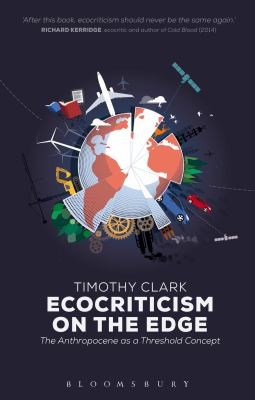
The twenty-first century has seen an increased awareness of the forms of environmental destruction that cannot immediately be seen, localized or, by some, even acknowledged. Ecocriticism on the Edge explores the possibility of a new mode of critical practice, one fully engaged with the destructive force of the planetary environmental crisis. Timothy Clark argues that, in literary and cultural criticism, the "Anthropocene", which names the epoch in which human impacts on the planet's ecological systems reach a dangerous limit, also represents a threshold at which modes of interpretation that once seemed sufficient or progressive become, in this new counterintuitive context, inadequate or even latently destructive. The book includes analyses of literary works, including texts by Paule Marshall, Gary Snyder, Ben Okri, Henry Lawson, Lorrie Moore and Raymond Carver.
Menrva's Summary
THE THESIS
The twenty-first century has seen an increased awareness of the forms of environmental destruction that cannot immediately be seen, localized or, by some, even acknowledged. Ecocriticism on the Edge explores the possibility of a new mode of critical practice, one fully engaged with the destructive force of the planetary environmental crisis. Timothy Clark argues that, in literary and cultural criticism, the "Anthropocene" represents a threshold at which modes of interpretation that once seemed sufficient or progressive become, in this new counterintuitive context, inadequate or even latently destructive. The book includes analyses of literary works by Paule Marshall, Gary Snyder, Ben Okri, Henry Lawson, Lorrie Moore, and Raymond Carver.
THE SCOPE MAP
- Explores the concept of the Anthropocene and its implications for critical theory.
- Argues for a new mode of critical practice engaged with the planetary environmental crisis.
- Analyzes how traditional modes of interpretation become inadequate or destructive in the context of the Anthropocene.
- Examines literary works by Paule Marshall, Gary Snyder, Ben Okri, Henry Lawson, Lorrie Moore, and Raymond Carver.
- Investigates environmental destruction that is unseen, localized, or unacknowledged.
- Proposes a critical practice that confronts the destructive force of the environmental crisis.
THE AUTHORITY PERSPECTIVE
The book is positioned as a significant contribution to ecocriticism, particularly in its engagement with the concept of the Anthropocene. It aims to re-evaluate existing critical practices in light of contemporary environmental challenges. The analyses of literary texts are central to developing its argument for a new critical approach. The work is likely to appeal to scholars and students of literary theory, environmental humanities, and cultural studies.
Page Count:
219
Publication Date:
2015-01-01
ISBN-10:
1472505735
ISBN-13:
9781472505736
Non-Fiction
Nature
Ecocriticism
Anthropocene
Literary Criticism
Community Tags
Similar Books