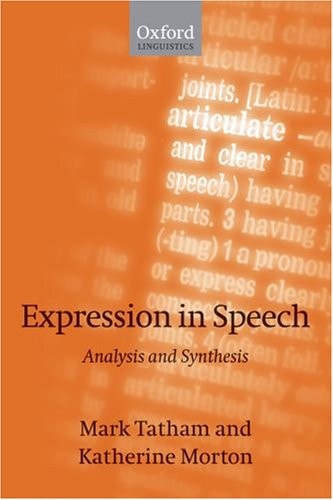
Expression in Speech: Analysis and Synthesis
0
0
As an Amazon Associate and affiliate partner, Menrva Books earns from qualifying purchases. Learn more
Author Description
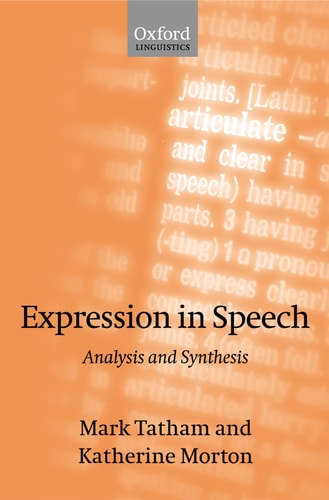
All human speech has expression. It is part of the 'humanness' of speech, and is a quality listeners expect to find. Without expression, speech sounds lifeless and artificial. Remove expression, and what's left is the bare bones of the intended message, but none of the feelings which surround the message. The purpose of this book is to present research examining expressive content in speech with a view to simulating expression in computer speech. Human beings communicate expressively with each other in conversation: now in the computer age there is a perceived need for machines to communicate expressively with humans in dialogue.
Menrva's Summary
THE THESIS
This book investigates the fundamental role of expressive content in human speech and the technical challenges of simulating these qualities in synthetic computer-generated dialogue. Katherine Morton and Mark Tatham draw upon their expertise in linguistics and speech science to analyze how emotional and expressive nuances transform raw information into natural communication. The authors argue that for human-computer interaction to reach its full potential, machines must move beyond the mechanical delivery of data to incorporate the expressive markers that listeners naturally expect.
THE SCOPE MAP
What You Will Find
- Analysis of the linguistic components that constitute expression in human speech.
- Methodologies for modeling and synthesizing expressive prosody in artificial systems.
- Examination of the psychological and social expectations listeners hold during dialogue.
- Technical frameworks for bridging the gap between bare-bones data transmission and naturalistic human-machine interaction.
THE AUTHORITY PERSPECTIVE
Experts in speech technology and linguistics recognize this work as a foundational text for understanding the intersection of human communication and synthetic speech synthesis. Readers frequently note the technical density of the prose, which serves as a rigorous guide for researchers aiming to improve the naturalness of computer-generated voices.
Page Count:
430
Publication Date:
2006-11-23
Publisher:
Oxford University Press
ISBN-10:
0199208778
ISBN-13:
9780199208777
Linguistics
Communication Studies
Computer Science