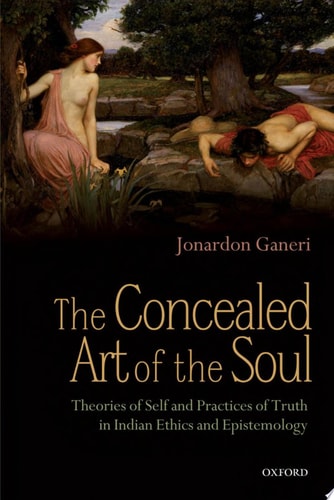
The Concealed Art of the Soul: Theories of the Self and Practices of Truth in Indian Ethics and Epistemology
0
0
As an Amazon Associate and affiliate partner, Menrva Books earns from qualifying purchases. Learn more
Author Description
In The Concealed Art of the Soul, Jonardon Ganeri presents a variety of perspectives on the nature of the self as seen by major schools of classical Indian philosophy.For Indian thinkers, a philosophical treatise about the self should not only reveal the truth about the nature of the soul, but should also engage the reader in a process of study and contemplation that will eventually lead to self-transformation. By combining careful attention to philosophical content and sensitivity to literary form, Ganeri deepens our understanding of some of the greatest works in Indian literary history. His magisterial survey includes the Upanisads, the Buddha's discourses, the epic Mahabharata, and the writings of Candrakirti, whose work was later to provide the foundation for Tibetan Buddhism.Ganeri argues that many Western theories of selfhood are not only present in, but are developed to high degree of sophistication in these writings, and that there are other ideas about the self found in the work of classical Indian thinkers which present-day analytic philosophers have not yet begun to explore.Scholars and students of philosophy and religious studies, particularly those with an interest in Indian and Western conceptions of the self, will find this book fascinating reading.
Menrva's Summary
THE THESIS
This work investigates how classical Indian philosophical texts function not merely as theoretical treatises on the self, but as transformative instruments designed to guide the reader toward self-realization. Jonardon Ganeri, a scholar of Indian philosophy, utilizes a comparative framework to bridge the gap between classical Indian thought and contemporary analytic philosophy. By analyzing the Upanisads, Buddhist discourses, and the Mahabharata, he argues that these texts contain sophisticated theories of selfhood that remain largely untapped by Western philosophical traditions.
THE SCOPE MAP
What You Will Find
- Comparative analysis of Indian and Western theories of selfhood and consciousness.
- Examination of the Upanisads, the Buddha's discourses, and the epic Mahabharata.
- Exploration of the philosophical writings of Candrakirti and their influence on Tibetan Buddhism.
- Methodology for reading philosophical texts as tools for personal and ethical transformation.
THE AUTHORITY PERSPECTIVE
Scholars recognize this text as a significant contribution to the study of classical Indian epistemology and its relevance to modern analytic discourse. Readers frequently note the academic rigor of the prose and the author's ability to synthesize complex literary forms with philosophical inquiry.
Page Count:
288
Publication Date:
2007-08-23
Publisher:
Clarendon Press
ISBN-10:
0199202419
ISBN-13:
9780199202416
Religion
Philosophy
Ethics
Asian Studies
Indian philosophy
Epistemology
Self Philosophy
Community Tags
Similar Books