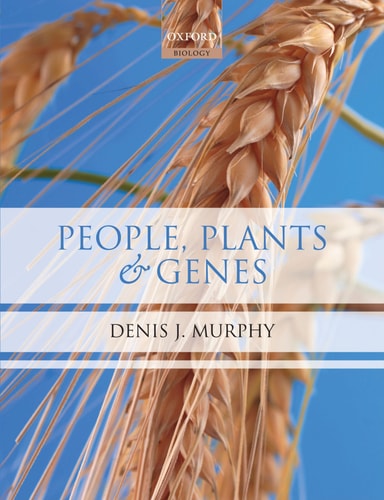
People, Plants and Genes: The Story of Crops and Humanity
0
0
As an Amazon Associate and affiliate partner, Menrva Books earns from qualifying purchases. Learn more
Author Description
This book provides a comprehensive interdisciplinary overview of human-plant interactions and their social consequences from the hunter-gatherers of the Palaeolithic Era to the 21st century molecular manipulation of crops. It links the latest advances in molecular genetics, climate research and archaeology to give a new perspective on the evolution of agriculture and complex human societies across the world. Even today, our technologically advanced societies still rely on plants for basic food needs, not to mention clothing, shelter, medicines and tools. This special relationship has tied together people and their chosen plants in mutual dependence for well over 50,000 years. Yet despite these millennia of intimate contact, people have only domesticated and cultivated a few dozen of the tens of thousands of potentially available edible plants. This limited domestication process led directly to the evolution of the complex urban-based societies that have dominated much of human development over the past ten millennia. Thanks to the latest genomic studies, we can now begin to explain how, when, and where some of the most important crops came to be domesticated, and the crucial roles of plant genetics, climatic change and social organisation in these processes. Indeed, it was their unique genetic organisations that ultimately determined which plants eventually became crops, rather than any conscious decisions by their human cultivators. The book is aimed at a wide audience ranging from plant specialists such as geneticists, molecular biologists and agronomists to a more general readership of archaeologists, anthropologists, historians and others who wish to explore the complex processes that have shaped the often crucial relationships between plants and human societies over the past hundred millennia.
Menrva's Summary
THE THESIS
How have the biological properties of plants and the evolution of human societies co-developed over the last 50,000 years? Denis J. Murphy, a specialist in plant genetics, synthesizes data from molecular biology, climate science, and archaeology to examine the mutual dependence between humans and crops. He argues that the genetic makeup of specific plants, rather than human intent alone, dictated the trajectory of agricultural development and the subsequent rise of complex urban civilizations.
THE SCOPE MAP
What You Will Find
- A historical timeline of human-plant interactions from the Palaeolithic Era to modern molecular manipulation.
- An analysis of how genomic studies explain the domestication of key global crops.
- A multidisciplinary framework linking climate change, social organization, and plant genetics.
- Evidence derived from archaeological records and contemporary molecular biology research.
THE AUTHORITY PERSPECTIVE
Experts recognize this work as a valuable interdisciplinary resource that bridges the gap between biological sciences and the humanities. Readers frequently note the accessibility of the prose, which manages to explain complex genetic concepts for both specialists and generalists interested in the history of human development.
Page Count:
432
Publication Date:
2007-09-12
Publisher:
Oxford University Press
ISBN-10:
0199207143
ISBN-13:
9780199207145
History
Science
Anthropology
Agriculture
Crops
Genetics
Plant Genetics
Archaeology
Community Tags
Similar Books