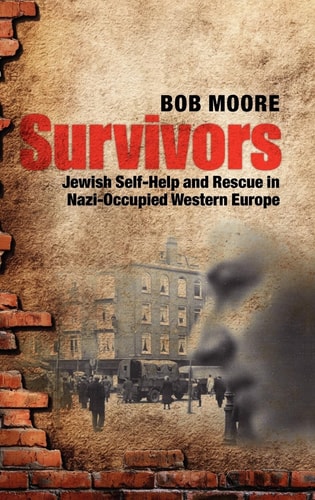
Survivors: Jewish Self-Help and Survival in Nazi-Occupied Western Europe
0
0
As an Amazon Associate and affiliate partner, Menrva Books earns from qualifying purchases. Learn more
Author Description
Survivors is the first examination of how more than half of the Jews in Western Europe survived the Holocaust. The widely differing rates of Jewish mortality have long vexed historians, who have traditionally concentrated on explaining this problem through national studies or by using a comparative approach, concentrating on the role of perpetrators, victims, and circumstances. In contrast, Survivors emphasizes the factors that helped Jews to avoid deportation, either through escape or by going underground. Taken as a whole, it book provides the first comprehensive study of Jewish survival in Western Europe in all its forms.Firstly, the book focuses on the escape routes used by Jews fleeing from the Nazis, and the disparate networks that ran them, including the routes from France into Spain and Switzerland, but also the lesser know history of the escape of Norwegian Jewry and the famous rescue from Denmark in 1943. Few of these networks were exclusively devoted to helping Jews -- in fact, most of them helped all manner of people, including Allied aircrew, escaping Prisoners of War, and political opponents. Moreover, they were not exclusively the product of the Second World War -- as Bob Moore shows, many had linkages with resistance in the First World War, and indeed to opposition to state power stretching back centuries.The second half of the book is devoted to three national case studies (France, Belgium, and the Netherlands) that focus on the interrelationship between Jewish self-help and the individuals and organizations that assisted in hiding them, including the Christian churches. These case studies serve to highlight the very different circumstances and structures pertaining in these three countries and how this had a direct bearing on levels of survival. Separate chapters then deal with the case of child rescue and the motivations of those involved in this most contentious of issues. Finally, the spotlight is turned on cases where Jews were saved, either directly or indirectly, by the Nazis themselves - and on the vexed question of Jews who survived by collaborating with the arrest and deportation of their co-religionists.
Menrva's Summary
THE THESIS
This work investigates the complex factors and survival strategies that enabled over half of the Jewish population in Western Europe to evade deportation and death during the Holocaust. Author Bob Moore, a specialist in European history, utilizes a comparative framework to analyze how national differences, escape networks, and individual agency influenced survival rates. By moving beyond traditional perpetrator-focused narratives, the book provides a systematic examination of the clandestine methods and social structures that facilitated Jewish survival across multiple occupied territories.
THE SCOPE MAP
What You Will Find
- Comparative analysis of survival rates in France, Belgium, and the Netherlands.
- Documentation of escape routes and resistance networks used by refugees and Allied personnel.
- Examination of the role of Christian churches and individual rescuers in hiding Jewish populations.
- Analysis of the specific challenges and methodologies involved in child rescue operations.
THE AUTHORITY PERSPECTIVE
Historians and scholars recognize this text as a significant contribution to the study of Holocaust survival, particularly for its focus on the mechanics of escape and underground networks. Readers frequently note the academic density of the prose and the thoroughness of the comparative national case studies provided.
Page Count:
512
Publication Date:
1916-01-01
Publisher:
Grosset & Dunlap
ISBN-10:
0199208239
ISBN-13:
9780199208234
History
European History
Holocaust
Jewish Studies
Community Tags
Similar Books












Reader Comments
Share Your Thoughts
No comments yet. Be the first to share your thoughts!