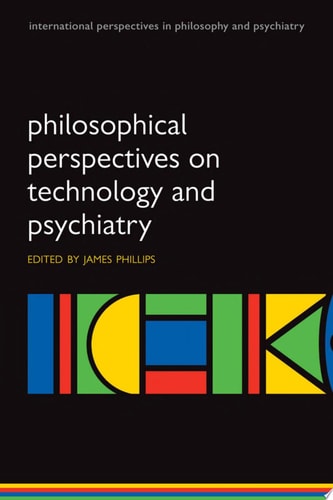
Philosophical Perspectives on Technology and Psychiatry
0
0
As an Amazon Associate and affiliate partner, Menrva Books earns from qualifying purchases. Learn more
Author Description
Our lives are dominated by technology. We live with and through the achievements of technology. What is true of the rest of life is of course true of medicine. Many of us owe our existence and our continued vigour to some achievement of medical technology. And what is true in a major way of general medicine is to a significant degree true of psychiatry. Prozac has long since arrived, and in its wake an ever-growing armamentarium of new psychotropics; beyond that, neuroscience promises ever more technological advances for the field.However, the effect of technology on the field of psychiatry remains highly ambiguous. On the one hand there are the achievements, both in the science and practice of psychiatry; on the other hand technology's influence on the field threatens its identity as a humanistic practice. In this ambiguity psychiatry is not unique - major thinkers have for a long time been highly ambivalent and concerned about the technological order that now defines modern society. For the future, the danger is that the psychiatrically real becomes that which can be seen, the symptom, and especially that which can be measured. Disorders and treatments might become reduced to what can be defined by diagnostic criteria and what can be mapped out on a scale.
Menrva's Summary
THE THESIS
This work investigates the tension between technological advancement in psychiatric practice and the preservation of psychiatry as a humanistic discipline. James F. Phillips examines how the integration of psychotropic medication and neuroscientific measurement tools challenges the traditional identity of the field. The author argues that while technology provides significant clinical benefits, it simultaneously risks reducing complex human experiences to measurable symptoms and diagnostic criteria. By situating psychiatry within the broader context of modern technological society, the text explores the potential loss of the subjective patient experience in an increasingly data-driven medical environment.
THE SCOPE MAP
What You Will Find
- Analysis of the impact of psychotropic medications on clinical practice.
- Philosophical frameworks regarding the technological order of modern society.
- Examination of the reductionist tendencies in diagnostic criteria and measurement scales.
- Discussion on the conflict between scientific objectivity and humanistic care.
THE AUTHORITY PERSPECTIVE
Experts identify this text as a critical contribution to the philosophy of medicine, particularly for its focus on the intersection of neuroscience and ethics. Readers frequently note the academic density of the prose, which serves as a foundational resource for practitioners and scholars interested in the future of psychiatric identity.
Page Count:
256
Publication Date:
2008-12-15
Publisher:
Oxford University Press
ISBN-10:
0199207429
ISBN-13:
9780199207428
Philosophy
Neuroscience
Medical Ethics
Technology
Psychiatry