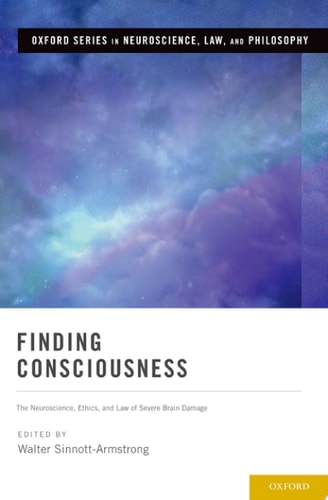
Finding Consciousness: The Neuroscience, Ethics, and Law of Severe Brain Damage
0
0
As an Amazon Associate and affiliate partner, Menrva Books earns from qualifying purchases. Learn more
Author Description
Modern medicine enables us to keep many people alive after they have suffered severe brain damage and show no reliable outward signs of consciousness. Many such patients are misdiagnosed as being in a permanent vegetative state when they are actually in a minimally conscious state. This mistake has far-reaching implications for treatment and prognosis. To alleviate this problem, neuroscientists have recently developed new brain-scanning methods to detect consciousness in some of these patients and even to ask them questions, including "Do you want to stay alive?"Finding Consciousness: The Neuroscience, Ethics, and Law of Severe Brain Damage addresses many questions regarding these recent neuroscientific methods: Is what these methods detect really consciousness? Do patients feel pain? Should we decide whether or not to let them die or are they competent to decide for themselves? And which kinds of treatment should governments and hospitals make available? This edited volume provides contextual information, surveys the issues and positions, and takes controversial stands from a wide variety of prominent contributors in fields ranging from neuroscience and neurology to law and policy to philosophy and ethics. Finding Consciousness should interest not only neuroscientists, clinicians, and ethicists but anyone who might suffer brain damage, which includes us all.
Menrva's Summary
THE THESIS
This volume investigates the intersection of neuroscientific advancements, ethical dilemmas, and legal frameworks surrounding the diagnosis and treatment of patients with severe brain damage. Walter P. Sinnott-Armstrong, alongside a diverse group of experts, examines the reliability of new brain-scanning technologies in detecting consciousness. The text argues that current diagnostic errors have profound implications for patient autonomy, end-of-life decisions, and the allocation of medical resources.
THE SCOPE MAP
What You Will Find
- Analysis of neuroimaging techniques used to detect consciousness in non-responsive patients
- Ethical frameworks for evaluating patient competence and end-of-life decision-making
- Legal and policy considerations regarding the treatment of patients in vegetative or minimally conscious states
- Multidisciplinary perspectives from neurology, philosophy, and law
Scope Limits
- The text does not provide a clinical manual for individual patient diagnosis
- It does not offer a singular, unified legal standard for all jurisdictions
THE AUTHORITY PERSPECTIVE
Experts and clinicians recognize this volume as a critical resource for understanding the complex moral and technical challenges inherent in modern neurology. Readers frequently note the academic density of the prose, which effectively bridges the gap between scientific methodology and philosophical inquiry.
Page Count:
278
Publication Date:
2016-01-01
Publisher:
Oxford University Press
ISBN-10:
0190280328
ISBN-13:
9780190280321
Philosophy
Medical
Law
Allied Health
Bioethics
Neurosciences
Medical Ethics
Neurology
Neuroscience
Community Tags
Other Editions(2)
Similar Books