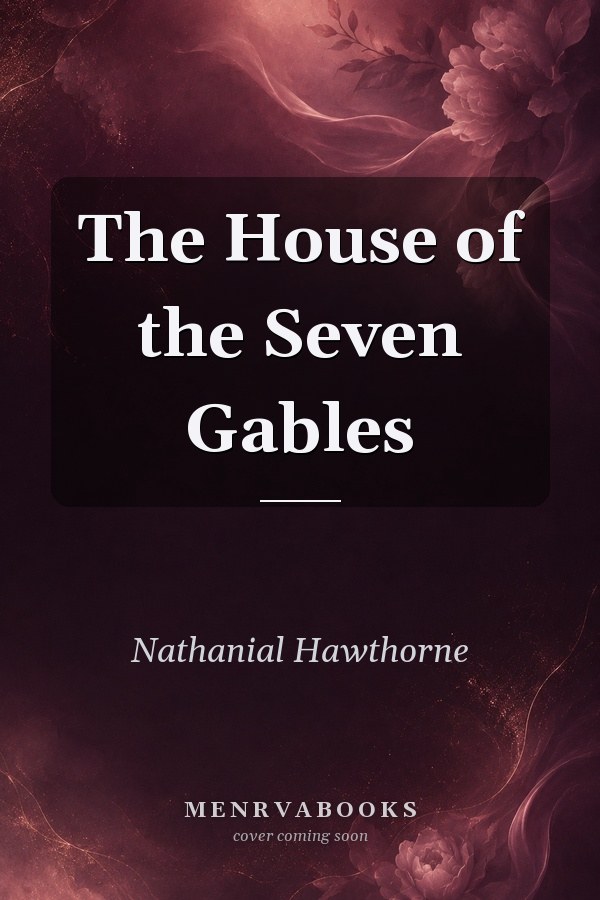
The House of the Seven Gables
0
0
As an Amazon Associate and affiliate partner, Menrva Books earns from qualifying purchases. Learn more
Author Description
In a sleepy little New England village stands a dark, weather-beaten, many-gabled house. This brooding mansion is haunted by a centuries-old curse that casts the shadow of ancestral sin upon the last four members of the distinctive Pyncheon family. Mysterious deaths threaten the living. Musty documents nestle behind hidden panels carrying the secret of the family's salvation -- or its downfall. Hawthorne called The House of the Seven Gables "a romance," and freely bestowed upon it many fascinating gothic touches. A brilliant intertwining of the popular, the symbolic, and the historical, the novel is a powerful exploration of personal and national guilt, a work that Henry James declared "the closest approach we are likely to have to the Great American Novel."
Menrva's Summary
THE PULSE
A centuries-old curse haunts the Pyncheon family, manifesting in the decaying, many-gabled mansion that serves as the site of their ancestral guilt. The narrative follows the remaining members of the Pyncheon lineage as they navigate the weight of past transgressions and the threat of impending ruin. Through a blend of realism and gothic atmosphere, the story examines the psychological toll of inherited sin and the struggle for redemption. The prose utilizes a third-person omniscient perspective to observe the characters' interactions with their environment and their own internal moral conflicts.
INSIDE THE PAGES
- Gothic architectural symbolism
- Exploration of inherited guilt and moral decay
- Supernatural undertones and ancestral curses
- Detailed character studies of the Pyncheon family
- Historical setting in New England
- Use of hidden documents and secrets
- Contrast between the past and the modernizing present
- Psychological tension regarding family legacy
THE COLLECTIVE ECHO
Readers and critics frequently highlight the atmospheric density of the prose and the effectiveness of the house itself as a central character. Discussion often centers on the balance between the gothic elements and the social commentary regarding American history and class structure. Many observers note that the pacing is deliberate, favoring thematic exploration over rapid plot progression. The novel is widely recognized for its symbolic depth and its contribution to the development of the American literary tradition. Scholars often point to the work as a foundational text for understanding the intersection of personal morality and national identity.
Page Count:
0
Publication Date:
2006-09-01
Publisher:
Oxford University Press
ISBN-10:
0199209715
ISBN-13:
9780199209712
Romance
classic
Gothic
Historical
Family Saga
Community Tags
Other Editions(11)

Eternal Chrysostom LLC
2021
Default edition
Independently Published
2021
CreateSpace Independent Publishing Platform
2017

CreateSpace Independent Publishing Platform
2016
CreateSpace Independent Publishing Platform
2015

CreateSpace Independent Publishing Platform
2015

CreateSpace Independent Publishing Platform
2014
CreateSpace Independent Publishing Platform
2013
Oxford University Press
2006

DIANE Publishing Company
2006
Turtleback
1997
Similar Books

Reader Comments
Share Your Thoughts
No comments yet. Be the first to share your thoughts!